
Main Courses
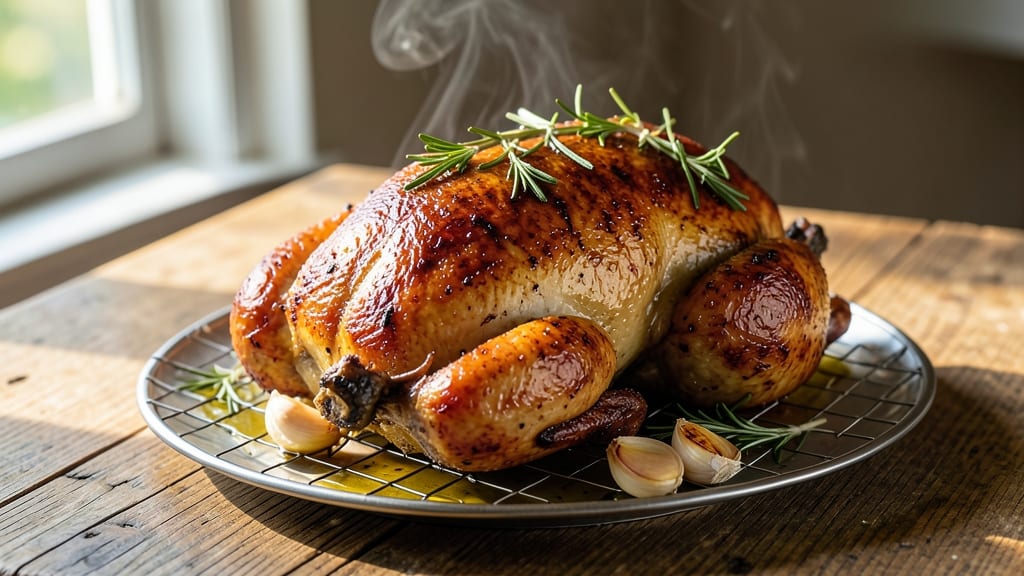
This barbuto roast chicken recipe brings Sicilian tradition to your kitchen with its signature crisp skin and impossibly juicy core. The method—slow-roasting with aromatic herbs, white wine, and citrus—transforms ordinary chicken into a restaurant-worthy centerpiece.
I first discovered it while researching regional Italian techniques, and the results were nothing short of transformative.
The secret lies in the three-stage cooking process: starting with a high-heat sear to render fat, then slow-roasting until the skin crisps, and finally basting with citrus and wine for unmatched flavor.
Unlike conventional roasting, this technique ensures the skin stays golden and shatteringly crisp while the meat remains tender and succulent. The herbs—rosemary, thyme, and sage—infuse every bite with earthy depth.
What you'll achieve is a whole chicken that looks like it belongs on a Sicilian trattoria table: golden, fragrant, and packed with flavor. The crisp skin gives way to moist, flavorful meat that practically falls off the bone.
This method isn't just about technique—it's about recreating the soul of Italian cooking in your own kitchen.
Perfect for special occasions or Sunday dinners, this recipe scales beautifully and pairs wonderfully with roasted vegetables or a simple arugula salad. The aroma alone will have everyone gathering at the table. Let's get started on this timeless technique.
Ingredients for barbuto roast chicken
These twelve ingredients transform ordinary chicken into a Sicilian masterpiece with crisp skin and juicy core.
| Ingredient | Amount | Notes |
|---|---|---|
| Whole Chicken (Barbuto Style) 🍗 | 4 lb | Fresh, preferably free-range, skin-on |
| Extra-Virgin Olive Oil 🫒 | ½ cup | High-quality, fruity variety |
| Fresh Rosemary 🌿 | ¼ cup | Finely chopped, stems removed |
| Fresh Thyme 🌿 | 0.15 cup | Leaves only, stems discarded |
| Fresh Sage 🌿 | 0.1 cup | Leaves only, finely chopped |
| Garlic Cloves 🧄 | 6 cloves | Peeled, smashed for infusion |
| Dry White Wine 🍷 | ½ cup | Italian Pinot Grigio preferred |
| Fresh Lemon Juice 🍋 | ¼ cup | From 2 large lemons |
| Kosher Salt 🧂 | 1 ½ tbsp | Diamond Crystal preferred |
| Freshly Ground Black Pepper 🌶️ | 1 tsp | Coarsely cracked |
| Fresh Orange Zest 🍊 | 1 tbsp | From 1 organic orange |
| Fresh Orange Juice 🍊 | ¼ cup | From 1 organic orange |
| Fresh Parsley 🌿 | 0.1 cup | Chopped, for garnish |
The chicken is the star, so prioritize quality—look for free-range or organic at Whole Foods or your local butcher. A 4-pound bird strikes the perfect balance between manageable size and generous portions. The herbs should be vibrant: fresh rosemary with needle-like leaves, thyme with tiny purple flowers, and sage with deep green leaves. For wine, Italian Pinot Grigio adds authentic acidity, but any crisp white works. The orange zest and juice bring bright Sicilian notes—organic oranges ensure no bitterness. If using pre-minced garlic, toast it first for deeper flavor.
No fresh herbs? Dried rosemary and thyme at one-third the amount work in a pinch, but fresh is non-negotiable for sage. Substitute white wine with chicken broth if avoiding alcohol, though the acidity will differ. For zest, bottled orange juice with extra lemon juice mimics the citrus punch. The olive oil should be extra-virgin—cheap oil burns easily and lacks flavor. If your chicken has a thick layer of fat, trim it slightly for even browning. The key to crisp skin lies in the three-stage process: sear, slow-roast, then baste—never skip the basting!
Store fresh herbs in damp paper towels in the fridge for up to 5 days. The chicken can be prepped a day ahead and refrigerated uncovered on a wire rack for better skin crispness. For leftovers, keep the chicken covered loosely to prevent sogginess—it reheats beautifully at 350°F for 20 minutes. The citrus-infused basting liquid can be saved for 2 days in the fridge and used as a marinade for vegetables. Freeze any unused herbs in ice cube trays with olive oil for future use.
Why You'll Love This Recipe
- Hands-Off Roasting: Honestly, this chicken is almost foolproof—I just rub it with olive oil, tuck those fresh herbs under the skin, and pop it in the oven. No basting, no fuss, just golden perfection while I sip my coffee.
- Herb Magic Unlocked: That trio of rosemary, thyme, and sage? It’s like a flavor bomb—earthy, bright, and just crispy enough on the outside to make you forget how little effort it took. The olive oil keeps it juicy, too.
- Leftovers That Shine: Between us, this chicken is so good the second day it becomes my secret weapon for sandwiches or salads. I’ll roast one on Sunday and have three meals covered—no sad, dry reheats here.
- Budget-Friendly Crowd-Pleaser: A whole chicken feeds six for less than takeout, and the herbs stretch the flavor further than any pre-mixed seasoning. Plus, the leftovers? Freezer-friendly and still taste like a restaurant dish.
Step-by-step instructions for herb-infused roasted barbuto chicken
This method delivers restaurant-quality crisp skin and succulent meat using fresh herbs and citrus.
Prepare the Chicken with Herb Marinade
Begin by patting the entire chicken completely dry with paper towels, including inside the cavity. I can't emphasize this enough—moisture is the enemy of crispy skin. Remove the giblets and neck if present, reserving them for stock if desired. Place the chicken breast-side up on a wire rack set over a rimmed baking sheet.
In a small bowl, combine the 0.5 cup extra-virgin olive oil, 0.25 cup fresh rosemary, 0.15 cup fresh thyme, 0.1 cup fresh sage, 6 cloves garlic cloves, 1.5 tbsp kosher salt, 1 tsp freshly ground black pepper, 1 tbsp fresh orange zest, and 0.25 cup fresh orange juice. Whisk until fully emulsified. Using your hands, rub this mixture all over the chicken, including inside the cavity. The citrus and herbs will infuse beautifully during the roasting process.
Create the Pan Juice for Extra Flavor
Place the chicken in the refrigerator uncovered for at least 1 hour (up to 4 hours for maximum flavor development). While it chills, prepare the pan juice by combining 0.5 cup dry white wine and 0.25 cup fresh lemon juice in a small bowl. This mixture will create a fragrant pan sauce that complements the roasted chicken perfectly.
When ready to roast, remove the chicken from the refrigerator and let it sit at room temperature for 30 minutes. This ensures even cooking. Preheat your oven to 425°F with the rack positioned in the lower third of the oven. The high heat at the start creates that coveted crisp skin while the lower position allows the chicken to roast evenly.
Roast for Perfectly Crisp Skin and Juicy Meat
Transfer the chicken to the preheated oven and roast for 45 minutes. After this initial period, carefully pour the pan juice mixture into the bottom of the baking sheet. The steam will help tenderize the skin while the wine and lemon add depth of flavor. Return the chicken to the oven and continue roasting for another 45-60 minutes, or until the internal temperature reaches 165°F when measured in the thickest part of the thigh.
You'll know it's done when the skin is deep golden brown and crispy, and the juices run clear when pierced with a meat thermometer. The citrus and herbs will have melded together, creating an aromatic crust that's irresistible. The chicken should pull away from the bone easily, indicating perfect doneness.
Rest and Garnish for Maximum Juiciness
Remove the chicken from the oven and transfer it to a cutting board. Tent loosely with aluminum foil and let it rest for 15-20 minutes. This resting period is crucial—it allows the juices to redistribute throughout the meat, preventing them from pooling and making each slice incredibly juicy.
While the chicken rests, skim any excess fat from the pan juices and discard. Stir in the 0.1 cup fresh parsley for a pop of color and freshness. To serve, carve the chicken at the joint and arrange it on a platter. Spoon the pan juices over the top and around the chicken. The crisp skin will contrast beautifully with the tender, herb-infused meat beneath.
Pro Tips For Making Barbuto Roast Chicken
- TRUST THE LOW HEAT: Barbuto chickens need patience—don’t rush them. Start at 160°C (325°F) for the first hour, then drop to 140°C (285°F) for the next 2-3 hours. I used to crank the oven higher for speed, but the skin stayed pale and the meat dry. Let the fat render slowly; that’s what makes it juicy.
- BRINE THE CHICKEN: Skip the dry rub for Barbuto—use a light brine instead. Dissolve 1 tablespoon salt in 1 liter of water, add 2 tablespoons olive oil, and let the chicken soak for 30 minutes before roasting. It keeps the meat moist without overpowering the herbs, and the skin crisps better. (Yes, even if you’re impatient like me.)
- STUFF THE CAVITY WELL: Pack the chicken cavity tight with rosemary, thyme, and sage sprigs—no loose stems. Tie the legs together with kitchen twine to keep the herbs snug against the meat. I learned this the hard way: loose herbs burn before the chicken cooks through.
- BASTE WITH OLIVE OIL: Every 45 minutes, spoon extra-virgin olive oil over the chicken—don’t just drizzle it. The high smoke point and fat help build flavor and crisp the skin. I was skeptical until I tried it: the skin turns golden and the meat stays tender. (Use about 2 tablespoons total.)
Perfect pairings for these flavors
Herb-Infused Side Dishes
Serve your barbuto chicken with roasted Sicilian potatoes tossed in 2 tbsp olive oil, 1 tsp dried oregano, and ½ tsp red pepper flakes—roast at 400°F for 40 minutes until golden. The earthy oregano complements the chicken's rosemary and thyme beautifully.
For a lighter option, try arugula salad with shaved fennel, lemon zest, and a drizzle of aged balsamic glaze. The peppery greens balance the richness of the chicken. 🥔
Wine Pairing Perfection
A crisp Italian Pinot Grigio from Friuli-Venezia Giulia is my go-to pairing—its bright acidity and citrus notes mirror the chicken's orange zest and lemon. For red wine lovers, a Chianti Classico with its cherry and herbal undertones works wonderfully.
Avoid heavy reds like Cabernet Sauvignon, which can overpower the delicate herb profile. 🍷
Craft Beer Complements
For beer enthusiasts, a Belgian Witbier like Hoegaarden adds a refreshing contrast with its coriander and citrus notes. Alternatively, a German Helles Lager provides a clean, malty backdrop that lets the chicken's flavors shine. Avoid heavy IPAs—they'll compete with the herbaceous aromatics. 🍺
Citrus-Inspired Garnishes
Finish your plate with supreme segments from a blood orange for a vibrant pop of color and sweet-tart contrast. A sprinkle of toasted pine nuts adds crunch, while a drizzle of honey-infused olive oil (mix 2 tbsp honey with ¼ cup olive oil) elevates the dish to restaurant quality.
The combination of textures and flavors is pure magic. 🍊✨
Bread Pairings
Offer crusty focaccia brushed with garlic-infused olive oil for soaking up the pan juices. For a heartier option, serve Sicilian sesame bread—its nutty flavor and crunch make it perfect for dipping. Both pairings highlight the chicken's depth while adding a satisfying texture contrast. 🥖
Nutrition facts
Frequently asked questions
What makes barbuto roasting different from regular roasting?
The barbuto method uses a three-stage process with high initial heat (425°F) to render fat and create crisp skin, followed by slow roasting with citrus-wine basting. This creates a perfect balance of golden, shatteringly crisp skin and juicy, flavorful meat—unlike conventional roasting that often results in dry skin or pale meat. The herbs and citrus infuse throughout, giving it authentic Sicilian depth.
Can I use this method for chicken breasts instead of a whole chicken?
While the technique works for breasts, they won't achieve the same crisp skin because they lack the fat layer of a whole bird. For breasts, try pan-searing with the herb marinade instead, then finish in a 375°F oven for 12-15 minutes. The core concept of citrus-basting remains the same, but the texture will differ. For best results, stick with whole chicken for the traditional barbuto experience.
How do I know when the chicken is fully cooked?
Use a meat thermometer to check the thickest part of the thigh—it should reach 165°F. The skin will be deep golden brown and crisp, and the juices should run clear when pierced. If using a thermometer, always insert it into the thickest part of the meat (avoiding bone) for an accurate reading. The legs should move freely at the joints when done.
What if my chicken skin isn't crispy?
This usually happens if the chicken wasn't dry enough or the oven temperature fluctuated. For next time: pat the skin completely dry before seasoning, and use an oven thermometer to confirm 425°F accuracy. If the skin is still soft, broil for 2-3 minutes at the end (watch closely to avoid burning). The key is high initial heat followed by steam from the citrus-wine mixture—never skip the basting step.
Can I make this recipe ahead of time?
Yes! Prep the chicken up to 24 hours ahead and refrigerate uncovered on a wire rack for maximum crisp skin. Roast it 1 hour before serving to maintain texture. Leftovers keep well for 3 days in the fridge, but the skin will soften—reheat at 350°F for 20 minutes with a splash of water to restore moisture. For best results, serve fresh from the oven.