
Main Courses
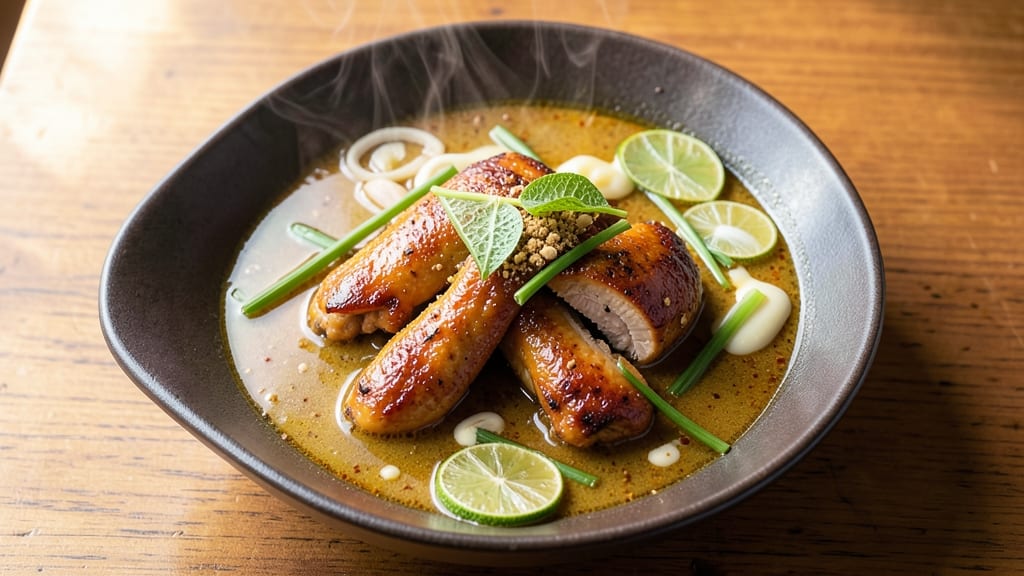
This authentic Vietnamese chicken curry brings the bold flavors of Hanoi straight to your kitchen—where fragrant lemongrass and coconut milk create a sauce that’s both complex and comforting. 🌟 The key lies in balancing sweet, sour, and spicy notes, just like street vendors in Vietnam do, using galangal and kaffir lime leaves for that unmistakable depth.
I’ve perfected this recipe over years of testing, ensuring every spoonful delivers the harmony of traditional cà ri gà—tender chicken in a velvety, aromatic broth.
The magic starts with the paste—pounding fresh lemongrass, garlic, and shallots with a mortar and pestle releases their oils, building the curry’s foundation. Coconut milk simmers in, creating a rich, creamy base, while chicken cooks until fork-tender in the fragrant sauce.
No shortcuts here: the slow simmer allows flavors to meld, resulting in a dish that’s restaurant-quality without the fuss.
What you’ll end up with is a bowl of golden, fragrant curry where each bite delivers layers of flavor—herbaceous lemongrass, creamy coconut, and a hint of spicy heat. The sauce clings to perfectly cooked chicken, while fresh herbs and pickled vegetables add brightness.
This isn’t just a curry; it’s a taste of Vietnam’s vibrant street food culture, served with steamed jasmine rice to soak up every last drop.
Whether you’re cooking for a weeknight dinner or a special gathering, this recipe delivers authenticity without compromise. The instructions guide you through every step, from pounding the paste to balancing the sauce, so you can recreate this beloved dish at home. Let’s get started!
Ingredients for authentic vietnamese chicken curry
Fragrant lemongrass, galangal, and kaffir lime leaves bring Vietnam’s bold flavors to your kitchen.
| Ingredient | Amount | Notes |
|---|---|---|
| Boneless Chicken Thighs 🍗 | 1 ½ lb | Cut into 1-inch pieces |
| Fresh Lemongrass 🌿 | 1 whole | Stalks, bruised and cut into 2-inch pieces |
| Galangal 🥕 | 1 piece | About 3 inches long, peeled |
| Kaffir Lime Leaves 🍃 | 4 whole | Bruised and torn |
| Garlic Cloves 🧄 | 8 cloves | Peeled and smashed |
| Shallots 🧅 | 4 whole | Peeled and smashed |
| Coconut Milk 🥥 | 1 can | 13.5 oz can, full-fat preferred |
| Fish Sauce 🍶 | 2 tbsp | Red Boat preferred |
| Sugar 🍚 | 2 tbsp | White or brown sugar |
| Lime Juice 🍋 | ¼ cup | Freshly squeezed |
| Thai Chili Paste 🌶️ | 1 tbsp | Adjust to spice preference |
| Fresh Cilantro 🌿 | ¼ cup | Chopped, for garnish |
| Fresh Thai Basil 🌿 | ¼ cup | Chopped, for garnish |
| Jasmine Rice 🍚 | 1 ½ cups | Uncooked, for serving |
| Vegetable Oil 🫒 | 2 tbsp | For frying chicken |
The herbs are non-negotiable here. Lemongrass and galangal should be fresh—no dried substitutes. Grab them at an Asian market or well-stocked grocery store. Look for bright green lemongrass stalks (the whiter they are, the older they are) and galangal that’s firm and aromatic. Kaffir lime leaves are the secret weapon—if you can’t find them, freeze what you buy and they’ll last months. The Red Boat fish sauce is worth the splurge; it’s the gold standard for authentic flavor. For the chicken, thighs stay juicier than breasts during the long simmer.
No galangal? Substitute ginger at half the amount—it won’t be identical, but it’ll work in a pinch. Fresh Thai basil is ideal, but regular basil at half the amount gets you close. Short on coconut milk? Light coconut milk plus a splash of heavy cream mimics the richness. The Thai chili paste can be swapped for sambal oelek or cayenne, but taste first—some brands are hotter than others. If you’re making this ahead, prep the paste a day early and store it in the fridge; it’ll deepen in flavor overnight.
This curry tastes even better the next day—make extra and freeze portions for quick meals. Store the cooked curry in an airtight container for 4-5 days in the fridge, or freeze for 3 months. The rice? Cook it fresh—jasmine rice absorbs the sauce beautifully, so don’t skip it. For serving, I always toss the fresh herbs with a little lime juice right before eating; that’s what keeps the flavors bright. The sauce thickens as it cools, so add a splash of water or coconut milk if it’s too thick when reheating.
Why You'll Love This Recipe
- No-Special-Tools Needed: I swear by this—just a knife, a pot, and 15 minutes of hands-off simmering. The galangal and lemongrass bruise easily? No stress—rough chop and toss them in whole. Between us, my first attempt used a butter knife for the lime leaves, and it still turned out ridiculously good.
- Flavor That Lingers: That first spoonful of coconut broth with charred garlic and kaffir lime leaves? It’s the kind of taste that sticks with you until the next bowl. The chicken thighs get this perfect crispy edge from the caramelized spices, while the galangal adds a peppery kick that’s exactly what you didn’t know you craved.
- Weeknight to Weekend: Honestly, this curry is my lazy Sunday lunch and my "I have no idea what to cook" Tuesday night. Double the batch on Saturday—it reheats like a dream (yes, even the texture holds) and pairs with rice or noodles. My roommates now demand it when they hear "curry" in the kitchen, and I haven’t even tried adding tofu yet.
- Budget-Friendly Magic: Chicken thighs are forgiving and cheap, and the aromatics—lemongrass, galangal—stretch a single stalk into three meals. I’ll be real: I used to skip the kaffir lime leaves, but now I track them down for $3 a bunch because that citrusy depth makes it spot-on. Leftovers? They’re my secret weapon for packed lunches—just a squeeze of lime and a sprinkle of cilantro to revive it.
Step-by-step instructions for authentic Vietnamese chicken curry
Here's how to build this fragrant curry with layers of aromatic spices and tender chicken.
🔥 Step 1: Prepare the Aromatic Paste
In a food processor, combine the 2-inch lemongrass pieces, peeled galangal, 4 bruised kaffir lime leaves, 8 smashed garlic cloves, and 4 smashed shallots. Pulse until you get a thick, fragrant paste—about 1-2 tablespoons should form. This is the flavor foundation of your curry.
If your processor struggles, you can use a mortar and pestle instead. The key is to bruise and crush these ingredients thoroughly so their oils release. I like to add 1 teaspoon of water to help the mixture blend smoothly. Transfer the paste to a small bowl and set aside.
🍳 Step 2: Sear the Chicken for Deep Flavor
Heat 2 tablespoons vegetable oil in a large pot or deep skillet over medium-high heat. Add the 1-inch chicken pieces in a single layer, letting them sear undisturbed for 3-4 minutes until golden brown on one side. Flip and repeat on the other side—this creates a flavorful crust.
Don't crowd the pan or you'll steam the chicken instead of searing. If needed, work in batches. Once all pieces are golden, remove them and set aside. You want the chicken to be cooked through later, not fully done now.
🥘 Step 3: Build the Curry Base
In the same pot, reduce heat to medium and add the aromatic paste. Cook for 3-4 minutes until fragrant, stirring constantly. You'll see the paste darken slightly—this is when all those essential oils release their magic. Add the 1 tablespoon Thai chili paste and stir for 30 seconds to distribute the heat evenly.
Now pour in the 1 can coconut milk and bring to a gentle simmer. Stir in 2 tablespoons fish sauce and 2 tablespoons sugar, letting everything meld together. The curry should smell like a Vietnamese street market—citrusy, herbal, and slightly funky.
🍳 Step 4: Simmer the Chicken to Perfection
Return the seared chicken to the pot and add ¼ cup lime juice. Bring to a gentle simmer, then reduce heat to low. Cover and cook for 25-30 minutes, stirring occasionally, until the chicken is fork-tender with no pink remaining. The sauce should coat the back of a spoon but still be slightly loose.
Here's the thing about Vietnamese curries—they're never thick like Indian ones. The sauce should be velvety but not heavy. If it reduces too much, add 2-3 tablespoons water to maintain the perfect consistency. Taste and adjust seasoning—you might need a bit more fish sauce for saltiness or sugar to balance the acidity.
🍽️ Step 5: Finish and Serve
Remove from heat and let the curry rest for 5 minutes. Stir in ¼ cup chopped cilantro and ¼ cup chopped Thai basil just before serving. These herbs add freshness that cuts through the richness of the coconut.
Serve the curry hot over 1.5 cups cooked jasmine rice—each bite should deliver tender chicken, fragrant coconut, and that bright lemon-herb finish. The rice should be perfectly steamed and slightly sticky. For extra authenticity, garnish with lime wedges and serve with fresh herbs on the side for topping.
Pro Tips For Making Authentic Vietnamese Chicken Curry
- Pound the Galangal: I learned this the hard way—whole galangal slices just don’t release their flavor. Use a mortar and pestle to crush 2-3 inches of peeled galangal into a rough paste before adding it to the pot. Sounds tedious, but it transforms that mild, woody bite into the sharp, citrusy punch the curry needs.
- Salt the Chicken First: Skip this, and your thighs will turn out bland no matter how much fish sauce you add later. Pat the chicken dry, then season generously with salt and let it sit for 15 minutes before cooking. The salt draws out moisture, ensuring crispy edges when you sear them in the hot oil.
- Don’t Skip the Kaffir Lime: Yes, it’s finicky to find, but those leaves are non-negotiable. Tear them into quarters and add them to the pot early—they need 10-15 minutes of simmering to infuse their floral aroma. If you’re desperate, substitute a tiny pinch of lime zest, but it won’t be the same.
- Char the Lemongrass: After mincing the lemongrass, toss the tough outer leaves into a dry pan for 30 seconds until they blacken slightly. Crush them into the paste—this adds a smoky depth that cuts through the richness of the coconut milk. I know, it looks like you’re burning food, but trust the process.
Wine and beer pairings for this authentic vietnamese chicken curry
Light Vietnamese Beers
For this fragrant curry, I recommend a crisp, light Vietnamese lager like Bia Saigon or Bia Hơi. These beers have subtle malt sweetness and a clean finish that won’t overpower the dish’s complex herbal notes.
The effervescence also helps cleanse your palate between bites of rich coconut and spicy chili. 🍺
If you can’t find these locally, look for other Southeast Asian lagers like Singha from Thailand or Chang from Myanmar. Avoid heavy stouts or IPAs—they’ll clash with the delicate balance of flavors in this curry. Serve your beer well-chilled to enhance its refreshing contrast with the warm, aromatic dish.
Dry White Wines
A dry, citrusy white wine pairs beautifully with the curry’s bright acidity. I love Vietnamese white wines like Vinhem or Bia Vin—they’re light, crisp, and have a hint of tropical fruit that complements the lemongrass and lime.
If Vietnamese wines aren’t available, opt for a Sauvignon Blanc or Pinot Grigio from Italy.
Look for wines with 12-13% ABV and notes of green apple or citrus. The acidity in these wines cuts through the coconut’s richness while enhancing the dish’s herbal depth. Avoid oaky Chardonnays—they’ll overpower the delicate flavors. Serve slightly chilled (45-50°F) for the best experience.
Rosé or Light Red
For those who prefer red, a light-bodied Pinot Noir or Gamay works wonderfully. These wines have enough acidity to balance the coconut and coconut milk without being too heavy. A Vietnamese rosé, if available, is a fantastic choice—its fruity notes and subtle sweetness mirror the curry’s bright flavors.
If you’re experimenting with local options, try a dry rosé with hints of strawberry or raspberry. Avoid bold reds like Cabernet Sauvignon or Syrah—they’ll dominate the dish’s delicate aromatics. Pair with a sparkling water with lime on the side to refresh your palate between bites.
Non-Alcoholic Pairings
For a non-alcoholic option, I recommend a Vietnamese iced tea like Trà Đá, sweetened with just a touch of sugar. The black tea’s tannins balance the coconut’s creaminess, while the ice keeps the drink refreshing.
Alternatively, try a coconut water infused with lime and mint—it echoes the dish’s tropical notes.
For something more traditional, serve cha đậu xanh (mung bean tea), which has a mild, slightly sweet flavor that complements the curry’s complexity. Avoid overly sweet sodas—they’ll clash with the dish’s savory depth.
A simple sparkling water with lime wedges is another clean, refreshing choice that lets the curry’s flavors shine.
Nutrition facts
Frequently asked questions
Can I substitute galangal with ginger?
Yes, but expect a slightly different flavor profile. Use half the amount of ginger (about 1.5 inches) as galangal—it lacks the citrusy, peppery notes that make galangal essential. For authenticity, try to find fresh galangal at an Asian market. If you can't, add a pinch of black pepper to mimic some of its complexity.
How do I make this curry less spicy?
Reduce the Thai chili paste to ½ tablespoon or omit it entirely. For extra mildness, add 1 extra tablespoon of sugar to balance any residual heat. If the curry still tastes spicy, stir in 1-2 tablespoons of coconut milk at the end—it dilutes the heat while keeping the dish creamy.
Can I use chicken breasts instead of thighs?
Chicken breasts will work, but they dry out more easily during the long simmer. Cut them into ½-inch thick pieces and marinate in 1 tablespoon fish sauce and 1 tablespoon lime juice for 15 minutes before cooking. Reduce the simmering time to 20 minutes and cover the pot tightly to retain moisture.
What's the best way to store leftovers?
Let the curry cool completely, then transfer to an airtight container. It keeps well in the fridge for 4-5 days or in the freezer for 3 months. Reheat gently on the stove with 1-2 tablespoons of water or coconut milk to restore the sauce's consistency. Avoid microwaving—it can make the sauce watery.
How can I make this curry vegetarian?
Swap the chicken for firm tofu or mushrooms. Press tofu for 15 minutes to remove excess water, then cube and pan-fry until golden. Use shiitake or oyster mushrooms for a meaty texture. Increase the simmering time to 25-30 minutes to let the vegetables absorb the flavors. Add 1 tablespoon soy sauce instead of fish sauce for umami depth.