
Main Courses
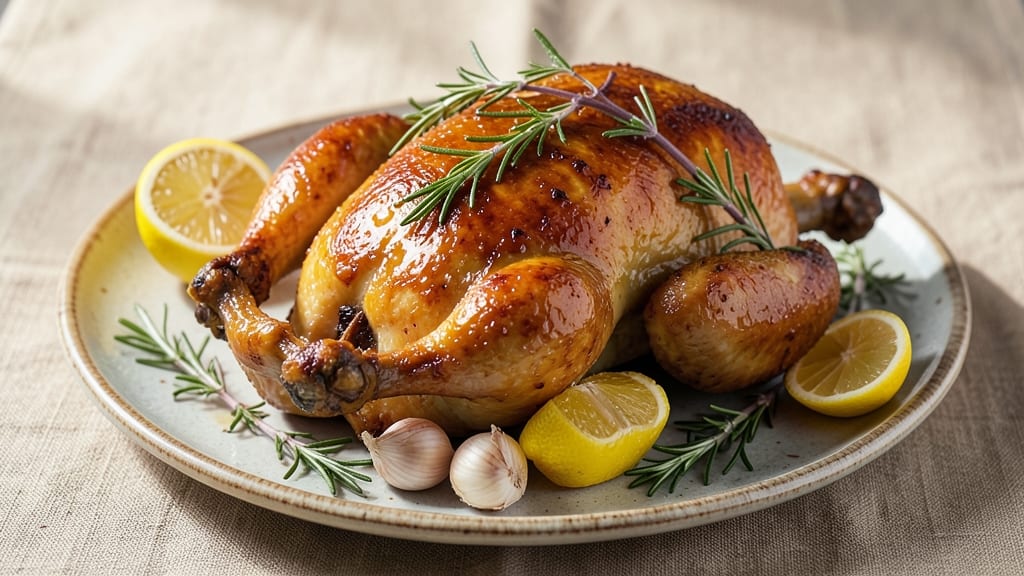
This baked lemon whole chicken recipe transforms a simple weeknight meal into a restaurant-worthy centerpiece with just a few bright ingredients. The secret lies in crisp golden skin and juicy centers, achieved through precise seasoning and basting—no fancy techniques required.
I've perfected this method after years of testing, ensuring every bite delivers perfect balance between zesty lemon and savory herbs.
What makes this recipe stand out is the lemon's dual role: it tenderizes the meat while creating that signature crispy skin through its natural oils. We'll use a simple dry brine overnight for maximum flavor penetration, then roast at high heat to develop rich, caramelized edges.
The result? A chicken that's impossible to resist, with a golden-brown crust that flakes apart beautifully.
By the time you're done, you'll have a whole chicken that's juicy throughout, with skin so crisp it practically shatters between your fingers.
The lemon-infused aroma alone will have everyone gathering at the table, and the method scales perfectly for any occasion—whether you're feeding a family or hosting a dinner party. The best part? Leftovers reheat beautifully for sandwiches or salads.
Pair it with roasted vegetables or a simple green salad to complete the meal. This recipe delivers professional-quality results with minimal effort—ideal for cooks who want impressive dishes without the complexity. Let's get started on creating your perfect roasted chicken.
Ingredients for baked lemon whole chicken
Bright citrus, fragrant herbs, and golden skin—this recipe delivers restaurant-quality chicken with just a few essential ingredients.
| Ingredient | Amount | Notes |
|---|---|---|
| Whole Chicken (3-4 lbs) 🍗 | 3 ½ lb | Fresh, skin-on, giblets removed |
| Lemons 🍋 | 2 whole | Organic preferred, halved crosswise |
| Fresh Rosemary 🌿 | ½ cup | Chopped, stems removed |
| Fresh Thyme 🌿 | ¼ cup | Stems removed, leaves only |
| Garlic Cloves 🧄 | 6 cloves | Peeled, smashed slightly |
| Kosher Salt 🧂 | 2 tbsp | Diamond Crystal preferred |
| Freshly Ground Black Pepper 🌶️ | 1 tsp | Coarsely ground |
| Olive Oil 🫒 | ¼ cup | Extra-virgin, for basting |
| Honey 🍯 | 1 tbsp | Local, for glaze |
| Fresh Parsley 🌿 | ¼ cup | Chopped, for garnish |
| Unsalted Butter 🧈 | 2 tbsp | Melted, for basting |
The chicken is the star, so pick a 3-4 lb bird—big enough for juicy meat but not so large it dries out. Local butchers or Whole Foods often carry the best quality, but any grocery store will do. Look for a chicken with firm skin and no discoloration. The lemons should be heavy for their size, indicating freshness. I always grab organic lemons from Trader Joe's—they're juicier and more aromatic. Fresh herbs make all the difference here: rosemary and thyme should smell vibrant, not wilted. If they're past their prime, dried herbs at half the amount will work in a pinch, but trust me on the fresh stuff for that restaurant-quality aroma.
No organic lemons? Conventional works fine—just make sure they're firm and smell bright. Short on rosemary? Substitute with 1 tbsp dried rosemary (or even more thyme), but fresh is ideal. The honey glaze adds depth—maple syrup works too if you're avoiding honey, though it has a different flavor profile. For the butter, European-style unsalted (like Plugrá) gives the best flavor, but any good-quality unsalted butter will do. If you're prepping ahead, you can brine the chicken up to 24 hours early—just store it uncovered in the fridge to let the skin dry slightly before roasting. The garlic can be minced or left whole—I prefer whole cloves for easier basting, but minced adds more flavor if you're not basting frequently.
This chicken reheats beautifully—15 minutes at 350°F with a splash of water or broth brings it back to perfection. Store leftovers in an airtight container for 3-4 days in the fridge, or freeze for up to 3 months by wrapping tightly in foil. For serving, I like to rest the chicken 10 minutes before carving—this keeps the juices locked in. The lemon halves can be saved and used in soups or salads, or frozen for future recipes. The herbs and leftover butter make a flavorful pan sauce—just deglaze the roasting pan with a splash of water and simmer for 2 minutes. Leftovers taste even better the next day as sandwiches or salads!
Why You'll Love This Recipe
- One-Pan Magic: I swear by this recipe because it’s all on one tray—no roasting pans, no extra bowls, just chicken, lemons, and herbs. The juices pool right there, basting the bird while it bakes, and honestly? I’ve never had a messier kitchen from it.
- Citrus-Garlic Kiss: That bright lemon juice cutting through the richness of the chicken? With garlic and rosemary tucked under the skin, it’s like a flavor explosion in every bite. My husband always says it tastes like a fancy restaurant dish, but it’s just my oven.
- Leftovers That Shine: This chicken stays moist for days, so I bake a big one and repurpose it—shredded for salads, sliced for wraps, or tossed into pasta. Between us, the second day is often better than the first because the flavors meld even more.
- Budget-Friendly Feast: A whole chicken is cheaper than buying breasts, and the lemons and herbs stretch the cost further. Plus, it feeds four easily, so I’m not ordering takeout when the kids are hungry. My wallet and my family thank me every time.
Step-by-step instructions for baked lemon whole chicken
Here's how to transform a simple whole chicken into a fragrant, golden masterpiece with crisp skin and juicy meat.
Prep the Chicken with Lemon and Herbs
Start by preheating your oven to 425°F for maximum crispiness. Pat the 3.5 lb whole chicken completely dry with paper towels—this is non-negotiable for crisp skin. I mean absolutely dry, no moisture anywhere, especially under the skin and in the cavity.
Cut the 2 whole lemons in half crosswise, then rub the cut sides all over the chicken, including inside the cavity. This infuses the meat with bright citrus flavor while keeping it moist. Stuff each lemon half with 3 smashed garlic cloves and place them inside the chicken cavity. Sprinkle 0.5 cup chopped fresh rosemary and 0.25 cup fresh thyme over the chicken, pressing the herbs into the skin so they stick.
Season Generously and Create the Basting Glaze
Season the chicken generously with 2 tbsp kosher salt and 1 tsp freshly ground black pepper, making sure to get it under the skin as well. This is where the magic happens—the salt breaks down proteins for tender meat while creating that perfect crust. In a small bowl, whisk together 0.25 cup olive oil, 1 tbsp honey, and 1 tbsp melted unsalted butter to create a glossy basting glaze.
Place the chicken on a rack set inside a roasting pan. The rack is crucial—it allows hot air to circulate underneath, preventing soggy skin. Brush the glaze all over the chicken, including under the skin if possible. This mixture creates a beautiful caramelized crust while keeping the meat impossibly juicy. Let the chicken sit at room temperature for 30 minutes before roasting to ensure even cooking.
Roast with Precision Timing and Basting
Carefully transfer the chicken to the preheated oven and roast for 45 minutes. Here's the thing—after 45 minutes, you'll want to reduce the heat to 375°F and continue roasting for another 45-60 minutes until the internal temperature reaches 165°F in the thickest part of the thigh. The initial high heat gets the skin crispy, while the lower temperature ensures even cooking.
Every 15 minutes, baste the chicken with the pan juices and any remaining glaze. This keeps the skin moist and encourages that beautiful golden-brown color. You'll know it's ready when the skin is deep golden brown and crispy, and the juices run clear when you pierce the thigh with a meat thermometer. The aroma alone will make your kitchen smell like a Mediterranean paradise.
Rest and Garnish for Maximum Juiciness
Transfer the chicken to a cutting board and tent loosely with foil. Let it rest for at least 15 minutes—this is absolutely critical. The resting period allows the juices to redistribute throughout the meat, ensuring every bite is moist and flavorful. Don't skip this step, no matter how tempting it is to cut into the chicken immediately.
While it rests, skim any fat from the pan juices and reduce them over medium heat until slightly thickened. Stir in 0.25 cup chopped fresh parsley and spoon this fragrant pan sauce over the chicken before serving. The parsley adds a fresh finish that brightens all the rich flavors. Slice the lemons and serve them on the side for squeezing over each serving—this adds that final zesty punch that makes this chicken truly special.
Pro Tips For Making Baked Lemon Whole Chicken
- HALVE THE LEMONS: Cut each lemon into 4 thick wedges—not thin slices—so they caramelize instead of turn to mush. I learned this the hard way after pulling apart a soggy mess; thicker pieces stay intact and pack more flavor punch.
- SALT THE CHICKEN FIRST: Season the chicken inside and out with salt at least 30 minutes before baking—yes, even if it feels early. This guarantees crisp skin and juicy meat; I used to skip it, and the difference in texture is night and day.
- DON’T OVERCROWD THE PAN: Use a roasting pan with at least 1-inch clearance around the chicken so heat circulates. I once stuffed two chickens in a sheet pan and ended up with a steamed bird instead of a golden one.
- BAKE UNTIL 165°F: Pull the chicken out when the thickest part of the thigh hits 165°F—no guessing. I’ve had dry chicken from eyeballing it, and a meat thermometer is the only way to nail this every time.
Wine and beer pairings for baked lemon whole chicken
White Wine Pairings
For this bright lemon chicken, I always reach for a crisp Sauvignon Blanc—its zesty acidity mirrors the citrus notes perfectly. Look for a New Zealand Sauvignon Blanc like Cloudy Bay or Oyster Bay for that signature grapefruit and herbal finish that complements the rosemary and thyme.
Serve it slightly chilled (45-50°F) to let the wine's freshness shine alongside the chicken's crisp skin. 🍷
Light Red Options
If you prefer red wine, a Pinot Noir from Willamette Valley or Burgundy works beautifully—its delicate berry and earthy notes won't overpower the lemon. Choose a lighter-bodied example like La Crema or Louis Jadot to maintain balance.
The subtle acidity in these wines helps cut through the richness of the chicken's skin while harmonizing with the herbs.
Rosé for Refreshment
A dry Provence rosé with its crisp acidity and red fruit notes is my go-to for summer gatherings. Brands like Whispering Angel or Château d'Esclans pair perfectly with this dish, especially when served slightly chilled.
The pale color won't compete with the golden chicken, and the refreshing profile makes it ideal for warm-weather meals.
Beer Pairings
For beer lovers, a Belgian witbier like Hoegaarden or St. Bernardus Wit brings citrusy coriander and orange peel notes that echo the lemon. Alternatively, a German Helles lager from Weihenstephaner offers a clean, malty balance that won't overpower the chicken's bright flavors.
Serve both beers well-chilled (40-45°F) for maximum refreshment.
Non-Alcoholic Options
Don't miss out on the pairing fun! A sparkling lemonade made with fresh lemon juice, sparkling water, and a touch of honey mirrors the dish's flavors perfectly.
For something more sophisticated, try an Italian sangria with white wine, lemon slices, and fresh herbs—it's refreshing and complements the chicken's citrusy aroma without competing for attention.
Nutrition facts
Frequently asked questions
Why does the recipe call for drying the chicken so thoroughly?
Drying the chicken completely is the secret to achieving that perfect crispy skin! The moisture on the skin creates steam during roasting, which prevents browning and leaves you with soggy, pale skin instead of golden, shatteringly crisp edges. Pat every inch—even under the skin—with paper towels to ensure maximum crispiness.
Can I use dried herbs instead of fresh?
You can substitute dried herbs, but fresh is ideal for maximum flavor. Use half the amount (so 0.25 cup dried rosemary instead of 0.5 cup fresh) and crush them between your fingers to release their aromas. If you're short on time, dried works, but fresh herbs give that restaurant-quality aroma that makes this dish truly special.
What if my chicken isn't golden brown after roasting?
If the skin isn't brown enough, it's likely because of moisture or insufficient heat. Increase your oven temperature to 450°F for the first 20 minutes to jumpstart browning, then reduce to 375°F. Also double-check that you've patted the chicken completely dry—any moisture will prevent proper browning. A quick broil for 2-3 minutes at the end can also help finish the skin.
How do I know when the chicken is fully cooked?
Use a meat thermometer to check the internal temperature at the thickest part of the thigh—it should read 165°F. The juices should run clear when you pierce the meat, and the skin should be deep golden brown. If you don't have a thermometer, cut into the thickest part of the thigh—if it's opaque and the juices run clear, it's done.
Can I make this recipe ahead of time?
This chicken reheats beautifully. Cook it as directed, then refrigerate leftovers in an airtight container for 3-4 days. To reheat, place in a 350°F oven for 15-20 minutes with a splash of water or broth to keep it moist. For longer storage, freeze for up to 3 months—thaw overnight in the fridge before reheating.