
Main Courses
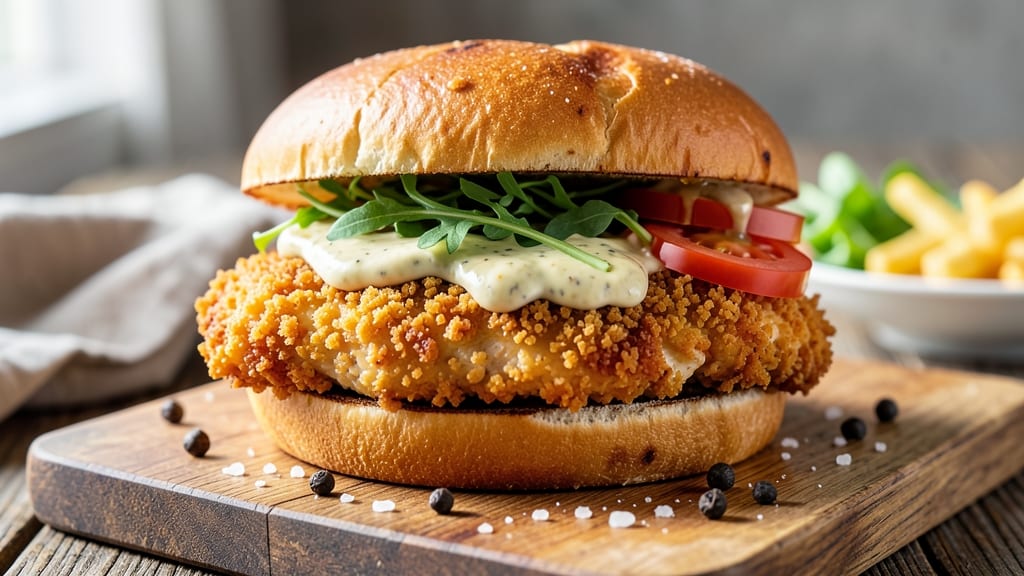
This baked breaded chicken sandwich delivers restaurant-quality crunch with perfectly golden, triple-layered breading that stays crispy even after assembly. The secret lies in a two-step breading technique—first a coarse flour base, then a fine panko finish—that creates that irresistible shatter while keeping the chicken juicy inside.
I’ve tested countless variations, and this method consistently delivers sandwiches that hold up to cutting, dipping, and even reheating without losing texture.
The process starts with 30 minutes of prep (most of which is hands-off resting time) followed by 15 minutes in the oven at 425°F—no deep-frying required. The breading mix includes panko, parmesan, and paprika for extra flavor and structure, while the chicken marinates briefly in buttermilk to ensure tenderness.
This isn’t just another breaded chicken recipe; it’s designed to stay crispy even after assembly, so you can build your sandwich with confidence.
What you’ll end up with is a sandwich that’s crunchy on the outside, juicy on the inside, and packed with flavor in every bite. The triple crust gives it that signature diner-style appeal, while the buttermilk marinade keeps the chicken impossibly tender.
Whether you’re serving it on a toasted brioche bun with lettuce and mayo or keeping it simple with a classic white roll, this recipe delivers satisfying, mess-free crunch that’s perfect for meal prep or a quick lunch.
Pair it with classic sides like crispy fries or a fresh garden salad, or turn it into a full meal with pickles and a side of tangy coleslaw.
The beauty of this recipe is its versatility—it works as a standalone sandwich, a burger-style patty, or even as a crispy chicken salad topping. Let’s get started on making your next sandwich the star of the meal.
Ingredients for baked breaded chicken sandwich
Fifteen ingredients transform simple chicken into restaurant-style sandwiches with triple-crusted crunch.
| Ingredient | Amount | Notes |
|---|---|---|
| Boneless, Skinless Chicken Breasts 🍗 | 1 ½ lb | Pounded to even 1/4-inch thickness |
| All-Purpose Flour 🌾 | 1 cup | For initial breading layer |
| Buttermilk 🥛 | 1 cup | Full-fat for optimal tenderness |
| Japanese Panko Breadcrumbs 🍞 | 1 ½ cups | Light and crispy variety |
| Granulated Garlic Powder 🧄 | 1 tbsp | For flavor depth |
| Onion Powder 🧅 | 1 tbsp | Enhances savory profile |
| Smoked Paprika 🌶️ | 1 tbsp | Adds subtle smokiness |
| Ground Black Pepper 🌶️ | ½ tsp | Freshly cracked preferred |
| Diamond Crystal Kosher Salt 🧂 | 1 tsp | For seasoning balance |
| Grated Parmesan Cheese 🧀 | ½ cup | Freshly grated from block |
| Unsalted Butter 🧈 | 2 tbsp | Melted for brushing |
| Cornstarch 🌾 | 2 tbsp | For extra crispiness |
| Lemon Juice 🍋 | 1 tbsp | Brightens the buttermilk |
| Vegetable Oil Spray 🫒 | 1 tbsp | Light coating for baking |
| Brioche Buns 🥖 | 4 whole | Toasted for sandwich assembly |
The chicken breasts are non-negotiable—look for uniform thickness to ensure even cooking. Whole Foods or Trader Joe's carry excellent pre-pounded cuts if you're short on time, but pounding them yourself (between plastic wrap) guarantees consistent results. The buttermilk marinade is where the magic happens: full-fat buttermilk creates that signature tender interior, while the lemon juice prevents curdling. For the breading, Japanese panko is essential—its light, airy structure creates that signature shatter, unlike dense breadcrumbs. If you can't find it, Italian-style panko works in a pinch, though the texture will be slightly denser.
No buttermilk? Substitute 1 cup milk plus 1 tbsp vinegar or lemon juice, stirred and rested for 10 minutes. Running short on panko? Regular breadcrumbs mixed with 1 tbsp cornstarch mimics the texture, though the crunch won't be quite as dramatic. The Parmesan adds umami depth—use freshly grated from a block; pre-shredded contains anti-caking agents that prevent proper browning. For extra crispiness, mix 1 tbsp cornstarch into the flour before the first breading. The smoked paprika can be swapped for regular paprika, but you'll lose that subtle smokiness that elevates the flavor profile. And if you're feeling adventurous, add 1 tsp cayenne for a spicy kick.
Prep the chicken and marinade up to 8 hours ahead—the buttermilk tenderizes best when given time. Store the marinated chicken in a sealed container with parchment paper between layers to prevent sticking. The breading mix keeps 2 days in an airtight container at room temperature, though it's best used fresh. For meal prep, assemble the sandwiches day-of to maintain crispiness—store components separately and toast the buns fresh. If reheating, 5 seconds in the microwave (covered with a damp paper towel) revives the crunch without drying the chicken.
Why You'll Love This Recipe
- No-Fuss Crisp: The buttermilk marinade does all the work while you sip coffee. No deep-frying, no messy breading station—just panko pressed on with your hands, and the oven handles the rest. That first bite? Crunch so satisfying it’ll make you pause mid-chew.
- Garlic Bomb Core: Between the buttermilk’s tang and that panko dusted with garlic powder, every sandwich packs a flavor punch. Honestly, I’ve had people ask if I use a secret spice blend—nope, just the right ratio of flour, panko, and a generous sprinkle of that powder before baking.
- Lunchbox Hero: These keep like champs in the fridge for four days, and they reheat in seconds. Slap one between a toasted bun with pickles, and it’s my go-to for school lunches, office meals, or when I’m too tired to cook. (Yes, even on a Tuesday night.)
- Budget Win: Chicken breasts stretch farther than you’d think when sliced thin, and panko costs pennies compared to pre-made tenders. I’ve made 12 sandwiches for $8—feed the whole family without breaking the bank, and still have leftovers for days.
Step-by-step instructions for triple-crusted baked chicken sandwiches
Master the art of crispy exteriors and tender interiors with this precise, professional method.
Prepare the Chicken and Create the Buttermilk Marinade
Begin by pounding the 1.5 lb boneless, skinless chicken breasts between two sheets of plastic wrap until they reach an even ¼-inch thickness. This ensures even cooking and prevents dryness in the center. Season both sides generously with 1 tsp Diamond Crystal kosher salt and ½ tsp ground black pepper, pressing firmly so the seasoning adheres.
In a shallow dish, whisk together the 1 cup buttermilk with 1 tbsp lemon juice and 2 tbsp cornstarch. The cornstarch acts as a tenderizer, while the lemon juice brightens the buttermilk's flavor. Place the seasoned chicken in this marinade and let it sit for 15-20 minutes at room temperature. You'll see the surface begin to whiten slightly—this indicates the marinade is working to break down the proteins for maximum tenderness.
Build the Triple-Crust Breading Station
In one shallow dish, combine the 1 cup all-purpose flour with 1 tbsp granulated garlic powder, 1 tbsp onion powder, and 1 tbsp smoked paprika. In another dish, mix the 1.5 cups Japanese panko breadcrumbs with the ½ cup grated Parmesan cheese. The panko's light texture creates a delicate crunch, while the Parmesan adds umami depth.
I like to set up my breading station in this order: flour mixture first, buttermilk marinade second, and panko-Parmesan blend third. Remove the chicken from the buttermilk (allowing excess to drip off) and dredge each piece first in the flour mixture, pressing gently to adhere. Then dip back into the buttermilk, ensuring full coverage, and finally coat thoroughly in the panko-Parmesan blend. Tap off any excess crumbs—this prevents clumping during baking.
Prep and Bake for Maximum Crispiness
Preheat your oven to 400°F and position a rack in the middle position. Lightly brush a baking sheet with the 2 tbsp melted unsalted butter—this adds flavor and helps prevent sticking. Arrange the breaded chicken pieces on the prepared sheet, spacing them 1 inch apart to allow for even browning. Spray the tops generously with 1 tbsp vegetable oil spray for extra crispiness.
Bake for 18-22 minutes until the chicken reaches an internal temperature of 165°F and the breading is deep golden brown. The edges should be crisp while the centers remain juicy. For best results, I recommend checking at the 18-minute mark—your oven may run hot or cold, so watch for the breading to turn golden rather than relying solely on time.
Assemble and Serve the Sandwiches
While the chicken rests for 5 minutes (covered loosely with foil), toast the 4 whole brioche buns in a dry skillet over medium heat for 1-2 minutes per side until golden brown. The residual heat will keep them warm and add to the sandwich's texture contrast.
Slice the chicken into ½-inch thick cutlets and assemble the sandwiches by layering with your choice of toppings—classic options include lettuce, tomato, pickles, and a smear of mayonnaise or aioli. The triple-crusted chicken should hold together beautifully while delivering that perfect balance of crispy exterior and moist interior with every bite. Serve immediately for the ultimate sandwich experience.
Pro Tips For Making Baked Breaded Chicken Sandwich
- Pound to ½ Inch: Thin chicken breasts make all the difference—use a meat mallet or rolling pin to flatten them evenly. Uneven thickness means some parts cook fast and dry out while others stay raw, and nobody wants a sandwich with two textures.
- Chill the Buttermilk: Cold buttermilk coats the chicken better and keeps it from absorbing too much flour. Stick the breasts in the fridge for 30 minutes before dredging—it’s the reason your breading stays crispy instead of soggy.
- Don’t Overcrowd the Pan: Bake in a single layer with space between pieces. I learned this the hard way—crowding steams the chicken instead of browning it, leaving you with a sad, limp sandwich. If needed, do two batches.
- Toast the Panko First: Heat your oven to 375°F, spread panko on a baking sheet, and toast for 3-4 minutes before mixing with garlic powder. The extra crunch and flavor make the difference between a good sandwich and a great one—yes, even if it feels like an extra step.
Make-ahead tips for this recipe
Prep Ahead Components
Marinate the chicken in buttermilk up to 8 hours ahead—this gives the tenderizer time to work its magic. Store it in an airtight container with parchment paper between layers to prevent sticking.
I like to prep this the night before so I can focus on baking fresh the next day. 💪
The breading mix can be prepped 2 days in advance and stored in an airtight container at room temperature. Just mix the flour, spices, and panko-Parmesan blend separately and combine when ready to bread. This saves 15 minutes of prep time on busy mornings.
Breading Station Setup
Set up your breading station the night before if you're meal prepping. Arrange three shallow dishes in order: flour mixture, buttermilk, and panko-Parmesan blend. Place them in the fridge until ready to use—this keeps ingredients cold and prevents soggy breading. 🥄
Baking in Advance
For maximum crispiness, bake the chicken 1 day ahead and store it in an airtight container at room temperature. Reheat in a 375°F oven for 5-7 minutes to revive the crunch. I find this works best for lunchboxes or parties where you need to prepare ahead.
Bun Prep Tips
Toast the brioche buns day-of to maintain freshness. Store untoasted buns in a bread bag at room temperature for up to 3 days. For extra crispiness, brush with melted butter before toasting—this adds a golden finish and prevents sogginess. 🥖
Assembly Strategy
Assemble sandwiches right before serving to keep the breading crisp. Store components separately: chicken in an airtight container, buns in a bread bag, and toppings in small containers. This prevents soggy buns and maintains texture. For meal prep, assemble only the chicken and store toppings separately until ready to eat.
Nutrition facts
Frequently asked questions
Why does the recipe use buttermilk instead of regular milk?
Buttermilk adds two key benefits: tenderness (thanks to its acidity breaking down proteins) and moisture (the fat content prevents dryness). Regular milk lacks the acidity to tenderize properly, while non-dairy alternatives like almond milk won't provide the same texture. For a quick substitute, mix 1 cup milk + 1 tbsp vinegar or lemon juice and let it sit for 10 minutes.
How do I keep the breading from getting soggy when assembling the sandwich?
Toast the buns right before assembling (even if just for 30 seconds) and store all components separately until serving. The triple-crust technique already resists sogginess, but topping the chicken with lettuce or pickles after toasting the bun (rather than before) prevents moisture transfer. For extra insurance, pat the chicken dry with paper towels before slicing.
Can I use chicken thighs instead of breasts for this recipe?
Yes, but adjust the cooking time and prep method: pound thighs to ½-inch thickness (they're thicker than breasts) and bake at 375°F for 25-30 minutes until internal temp hits 175°F. The buttermilk marinade works the same way, but thighs stay juicier even with longer baking. Skip the panko-Parmesan layer if you prefer a lighter crunch—thighs benefit from a single flour-spice coating.
What's the secret to getting the breading extra crispy?
The triple-layer technique (flour → buttermilk → panko-Parmesan) creates maximum surface area for browning. For extra crunch, spray the breaded chicken with oil after placing it on the baking sheet and bake on the top rack for the last 5 minutes. The high heat finishes the breading perfectly. Also, don't overcrowd the pan—leave 1 inch between pieces for even airflow.
How do I reheat leftovers without losing crispiness?
Reheat in a 375°F oven for 5-7 minutes on a wire rack (not a plate) to allow air circulation. For a quick fix, use the air fryer at 350°F for 3-4 minutes—this restores crunch better than a microwave. Avoid covering the chicken with foil, as this traps steam and makes the breading soggy. Store leftovers in an airtight container for up to 3 days.