
Sauces & Condiments
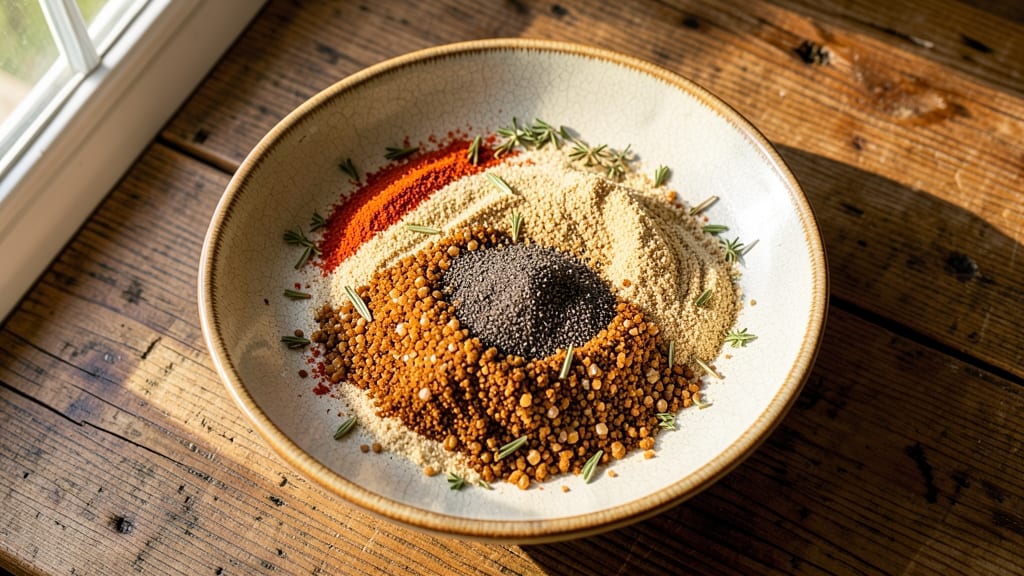
That celery-vinegar zing in McCormick's rotisserie chicken seasoning isn't just magic—it's a precise blend of spices that transforms ordinary chicken into something unforgettable.
Growing up in small-town Georgia, I learned how the right seasoning could elevate simple ingredients, and this blend is the secret weapon behind that signature tangy, savory flavor. The combination of celery salt, garlic powder, and onion powder creates depth that store-bought blends simply can't match.
This homemade version uses simple pantry staples measured in tablespoons and teaspoons, just like the original, but with the advantage of freshness and customizable heat levels. I developed this blend during a particularly busy week when I needed restaurant-quality flavor without the fuss of a full recipe.
The key is balancing the saltiness of celery salt with the warmth of paprika and the subtle bite of black pepper.
What makes this seasoning truly special is how it clings to the chicken, creating a crisp, flavorful crust while keeping the meat juicy inside.
Whether you're seasoning a whole bird, chicken thighs, or even roasted chicken breasts, this blend delivers that signature McCormick tang that makes every bite taste like it came from a professional rotisserie. The best part?
It keeps well in an airtight container for months, so you'll always have copycat magic at your fingertips.
Use it on any poultry dish or even sprinkle it over popcorn for a savory twist. Here's exactly what you'll need to recreate that iconic flavor at home—no shortcuts, just professional results.
Ingredients for rotisserie chicken seasoning mccormick
Nine simple spices that unlock that iconic rotisserie flavor you crave every Sunday.
| Ingredient | Amount | Notes |
|---|---|---|
| Celery Salt 🌿 | 1 ½ tbsp | Diamond Crystal preferred |
| Garlic Powder 🧄 | 1 tbsp | Freshly ground preferred |
| Onion Powder 🧅 | 1 tbsp | Diamond Crystal preferred |
| Paprika 🌶️ | ½ tbsp | Smoked variety for depth |
| Ground Black Pepper 🌶️ | ½ tbsp | Freshly ground for best flavor |
| Dried Thyme 🍃 | ½ tbsp | Leaves only, not ground |
| Ground Mustard 🌶️ | ¼ tbsp | Adds signature tang |
| Dried Parsley Flakes 🌿 | ¼ tbsp | For fresh pop of color |
| Granulated Garlic 🧄 | ¼ tbsp | Extra punch for garlic lovers |
| Salt 🧂 | ¼ tbsp | Diamond Crystal kosher |
The celery salt is non-negotiable—it's what gives that signature tang. Diamond Crystal is my go-to because it's coarser and dissolves better than table salt. Grab the bulk bin at Whole Foods or Trader Joe's if you want to splurge on freshness. The garlic and onion powders should be freshly ground (that means checking the date on the jar—if it's been open over a month, toss it). Smoked paprika adds that subtle campfire note that separates this blend from generic seasonings. I always double-check the spice aisle for Penzeys if I'm feeling fancy, but the store-brand stuff works fine too.
No smoked paprika? Regular paprika plus a pinch of liquid smoke gets you close. Want more heat? Add cayenne to taste—start with a quarter teaspoon and adjust. The ground mustard is what gives that vinegar-like kick, so don't skip it. If you're missing dried thyme, dried oregano at half the amount works in a pinch. For the parsley flakes, if you've got fresh, dry and crush the leaves yourself—it's worth the extra minute for that bright flavor. The blend is flexible enough to work on turkey, pork, or even roasted nuts, but the chicken is where it truly shines.
This keeps for 6-12 months in an airtight container in a cool, dark place. I like to portion it into small jars—one for the fridge for quick access, and the rest in the pantry. The spices will lose potency over time, so if it starts tasting flat, it's time to make a fresh batch. A little goes a long way—1-2 tablespoons per pound of chicken is perfect. Sprinkle it on while the chicken is still warm for the best adhesion, or mix it with a little olive oil to create a paste for extra cling.
Why You'll Love This Recipe
- Pantry Magic: I swear by this blend—no fresh herbs, no fancy prep, just five spices that transform store-bought chicken into something restaurant-worthy. The celery salt adds this subtle, salty depth that makes it taste homemade, even when it’s not.
- Crispy-Creamy Balance: That smoky paprika and black pepper give it a satisfying bite, while the garlic and onion powders melt into the meat for a creamy, savory punch. Honestly, it’s the kind of seasoning that makes you pause mid-bite to appreciate how good it is.
- Game for Any Plate: Slather it on chicken thighs for a weeknight dinner, toss it with roasted potatoes for a hearty lunch, or even sprinkle it over eggs—it works everywhere. I’ve used it for everything from tacos to sandwiches, and it never lets me down.
- Budget Booster: A single batch costs pennies and stretches across multiple meals. Between us, this is how I feed my family well without breaking the bank—no fancy ingredients, just smart seasoning that makes leftovers taste just as good as day one.
Step-by-step instructions for McCormick rotisserie chicken seasoning
Here's how to blend these ingredients into a signature seasoning that delivers that iconic rotisserie flavor.
Measure All Ingredients Precisely
Start by gathering all your ingredients and measuring them exactly as listed. I like to use a small mixing bowl and measure each component directly into it. The 1.5 tablespoons of celery salt is the star here—it provides that signature tangy depth that makes this blend so distinctive. Don't substitute regular salt, as celery salt has a completely different flavor profile.
Next, add the 1 tablespoon of garlic powder and 1 tablespoon of onion powder. These two ingredients form the aromatic backbone of the seasoning. I always use freshly ground versions when possible, as pre-ground spices lose potency quickly. The onion powder adds a subtle sweetness that balances the sharpness of the celery salt.
Add the Warm, Earthy Components
Now it's time to incorporate the warm, earthy spices that create the rotisserie chicken's signature depth. Add the 0.5 tablespoon of smoked paprika first—this gives that subtle smokiness that transports you straight to a deli counter. Then stir in the 0.5 tablespoon of dried thyme leaves and 0.5 tablespoon of ground black pepper. These ingredients work together to create a complex, savory profile that's both comforting and intriguing.
The 0.25 tablespoon of granulated garlic might seem like a small amount, but it packs a punch. This is what gives the seasoning that extra garlic kick that makes it so recognizable. I like to add it last among the dry ingredients so it gets thoroughly distributed throughout the blend.
Incorporate the Tangy and Finishing Touches
Add the 0.25 tablespoon of ground mustard next—this is what gives the seasoning that signature tang that makes it different from any other chicken seasoning blend. The mustard might seem like an odd addition, but it's absolutely essential for that authentic rotisserie flavor. Then sprinkle in the 0.25 tablespoon of dried parsley flakes for a fresh pop of color and a subtle herbal note that brightens the overall flavor.
Finally, add the 0.25 tablespoon of salt. This might seem like a small amount when you consider the celery salt you already added, but it's crucial for balancing all the flavors. The salt helps to round out the seasoning and ensures that all the individual components work together harmoniously.
Combine Thoroughly for Even Distribution
Use a whisk or small fork to thoroughly combine all the ingredients. You want to make sure every particle of each spice is fully incorporated and there are no pockets of concentrated flavor. This step is particularly important because you're working with such a small quantity of each ingredient—proper mixing ensures that every pinch of your seasoning delivers consistent flavor.
Give the mixture a good stir, then taste it. You should notice that complex blend of savory, tangy, and slightly smoky flavors that's so characteristic of rotisserie chicken. If you find it needs more salt or pepper, you can adjust it slightly, but generally, this blend should be perfectly balanced as written. The key is to trust the measurements—this is a recipe where precision matters.
Pro Tips For Making Rotisserie Chicken Seasoning Mccormick
- Toast the Spices First: Pop the paprika and garlic powder in a dry skillet over medium heat for 30 seconds—just until you smell that toasty aroma. I used to skip this, but now it’s the thing that makes the seasoning taste deeper and less powdery, especially when you’re mixing it into something like mashed potatoes or salad dressing.
- Measure by Spoons, Not Eyes: Use a level teaspoon for each spice—celery salt is heavier than it looks, and too much can turn your dish bitter. I learned this the hard way when my first batch of seasoned chicken tasted like a salt lick. A small kitchen scale helps if you’re really picky, but a proper spoon measurement works fine.
- Skip the Pre-Moistened Mix: If your recipe calls for water or oil to bind the seasoning, resist the urge to add it unless you’re using it immediately. The spices clump and lose potency fast. Instead, store the dry mix in an airtight container—it’ll keep for months and taste fresh every time.
- Double the Paprika for Color: Want that restaurant-style golden hue on your chicken or roasted veggies? Use twice the paprika called for, but cut the black pepper by half. It’s a small tweak, but it makes a real difference when you’re plating something that needs to look as good as it tastes.
Storing and reheating your rotisserie chicken seasoning mccormick
Pantry Storage Secrets
Store your homemade seasoning in an airtight container—I prefer amber glass jars from Ball because they block light and preserve flavor. Keep it in a cool, dark place like your pantry for up to 6 months, or freeze it for 12 months if you want maximum freshness.
The celery salt and parsley flakes are the first to lose potency, so check the flavor after 3 months if stored long-term. 🌶️
Freezer Extension
For long-term storage, divide the seasoning into small silicone ice cube trays—each cube equals about 1 tablespoon. Once frozen solid, transfer cubes to a freezer bag and flatten to save space. This method keeps the spices fresh for up to a year without clumping.
I keep a stash in my freezer for those last-minute holiday meals when I need that rotisserie magic in a hurry. ❄️
Reviving Stale Seasoning
If your seasoning tastes flat after sitting too long, revive it by adding 1 teaspoon of fresh lemon juice and ½ teaspoon of smoked paprika per 2 tablespoons of seasoning. The acidity cuts through any dullness, while the paprika restores that smoky depth.
I also like to toast the spices in a dry skillet over low heat for 2 minutes to wake up their flavors before using. 🔥
Reheating Seasoned Chicken
For leftover rotisserie-style chicken, reheat it in a skillet with 1 tablespoon of chicken broth over medium heat until it reaches 165°F. The broth prevents drying while the residual seasoning clings to the meat.
For oven reheating, wrap the chicken in aluminum foil with 1 teaspoon of water and bake at 325°F for 15 minutes. This keeps it juicy and flavorful. 💫
Seasoning Chicken from Scratch
When using your blend on raw chicken, apply it 1 hour before cooking to let the spices adhere. For whole chickens, mix 2 tablespoons of seasoning with 1 tablespoon of melted butter to create a paste—this ensures even coverage.
If you're seasoning cut-up pieces, sprinkle 1 teaspoon per pound directly onto the meat. The key is patience—don't rush the seasoning time. 🍗
Versatile Uses Beyond Chicken
This seasoning isn't just for poultry—sprinkle it on roasted potatoes, corn on the cob, or even popcorn for a savory twist. For turkey or pork, use 1.5 tablespoons per pound of meat.
The blend also works wonders on grilled shrimp or baked tofu for a quick flavor boost. Just remember, the celery salt makes it uniquely versatile. 🌟
Nutrition facts
Frequently asked questions
Can I use this seasoning on other meats besides chicken?
This blend works beautifully on turkey, pork, and even roasted vegetables. For meats like turkey or pork, use 1.5 tablespoons per pound instead of the 1 teaspoon per pound recommended for chicken. The celery salt and mustard give it that signature tang that pairs perfectly with hearty dishes.
What if I don't have celery salt?
You can substitute it by mixing 1.5 tablespoons regular salt with 1 teaspoon dried celery flakes (found in the spice aisle). Without celery salt, the seasoning will lose its signature tangy depth, but it'll still taste delicious. For a quick fix, add ½ teaspoon of white vinegar to the mix to mimic some of that vinegar-like brightness.
How much seasoning should I use for a whole chicken?
For a 4-5 pound whole chicken, use 2-3 tablespoons of this seasoning. To ensure even coverage, mix it with 1 tablespoon of melted butter or olive oil to create a paste. Apply it generously under the skin and all over the outside. The butter helps the spices cling better and adds extra flavor.
Can I make this seasoning less spicy?
Yes! If you prefer a milder blend, reduce the paprika and black pepper to ¼ teaspoon each and omit the granulated garlic if you're sensitive to strong flavors. The mustard and celery salt will still give you that classic rotisserie taste without the heat. Adjust to taste after mixing.
Why does my homemade seasoning taste different from store-bought?
Store-bought blends often contain extra fillers or artificial flavors to extend shelf life. Freshly ground spices and high-quality ingredients like Diamond Crystal celery salt make a noticeable difference. The homemade version also has more vibrant, natural flavors since it's not sitting on a shelf for months. Trust the process—your blend is fresher and more flavorful!