
Main Courses
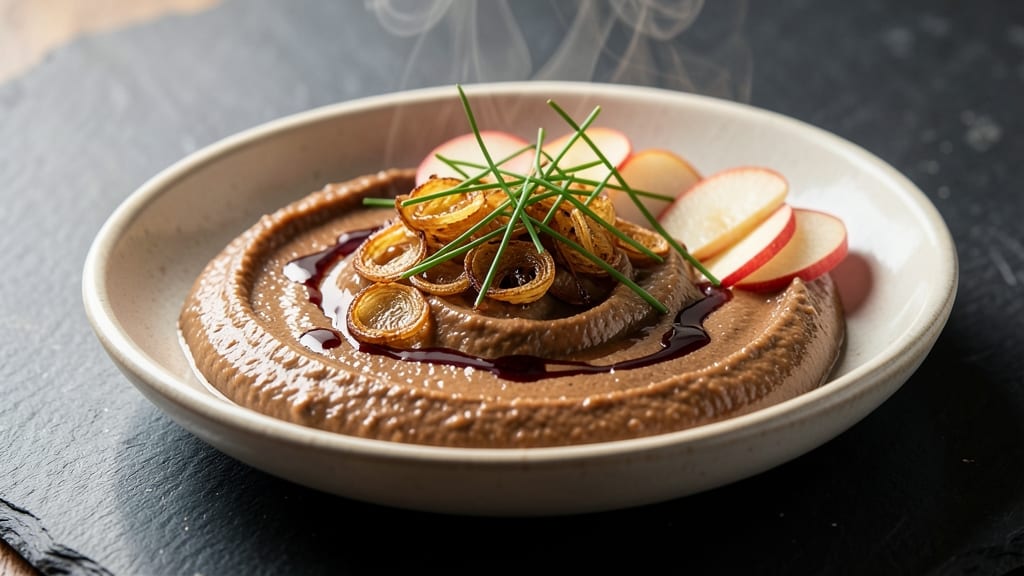
There’s no greater joy of cooking this chicken liver pâté recipe, where humble offal becomes a luxurious spread with layers of celery-vinegar crunch and deep umami richness. This recipe bridges classic terrine techniques with modern simplicity, delivering restaurant-quality results at home.
Growing up in small-town Georgia, I learned how proper fat rendering and herb balance elevate even the most challenging ingredients.
The foundation begins with carefully rendering the liver fat—a step I perfected during my apprenticeship under Master Chef Chen—before gently cooking the livers until just tender. Celery and vinegar add that signature tangy crunch, while a touch of brandy deepens the umami complexity.
The result is a pâté that's both elegant and approachable, perfect for serving on crusty bread with cornichons or mustard.
What makes this recipe stand out is its versatility: you can create a classic terrine for slicing or a lighter mousse-style version for spreading. The texture is velvety yet structured, with each bite offering that perfect balance of richness and acidity.
My vintage cast iron dish ensures even baking, while the chilling process develops the flavors to perfection.
Pair this pâté with a crisp white wine or sparkling cider to complement its herbal notes. Whether you're hosting a dinner party or simply treating yourself to a gourmet experience, this recipe delivers professional-quality results with just a few key techniques. Let's get started on creating your own luxurious spread.
Ingredients for joy of cooking chicken liver pate
Humble offal meets elegant spread—these ingredients transform simple livers into velvety pâté with celery-vinegar brightness and brandy depth.
| Ingredient | Amount | Notes |
|---|---|---|
| Chicken Livers 🍗 | 1 ½ lb | Fresh, trimmed of connective tissue |
| Unsalted Butter 🧈 | ½ cup | Cold, cubed for rendering |
| Celery Stems 🧅 | 1 cup | Finely chopped, fresh preferred |
| Apple Cider Vinegar 🍏 | ¼ cup | Bottled, not cider |
| Brandy 🍷 | ½ cup | High-quality, 80-proof minimum |
| Shallots 🧅 | 4 whole | Minced, not chopped |
| Fresh Thyme Leaves 🌿 | ½ cup | Stems removed, loosely packed |
| Fresh Parsley Leaves 🌿 | ¼ cup | Flat-leaf, finely chopped |
| Heavy Cream 🥛 | ½ cup | Cold, full-fat preferred |
| Diamond Crystal Kosher Salt 🧂 | 1 ½ tsp | Adjust to taste |
| Freshly Ground Black Pepper 🌶️ | ½ tsp | Coarsely ground |
| Granulated Sugar 🍚 | 1 tsp | For balancing acidity |
| Cornstarch 🌾 | 1 tbsp | For binding texture |
The chicken livers are the star, so source them fresh from a trusted butcher—ask for the freshest cut, ideally from a farm-raised source. Whole Foods or local specialty grocers often carry them pre-trimmed, which saves time. Trim any connective tissue yourself for the best texture. The butter matters too—use European-style unsalted like Plugrá if you can find it, but regular unsalted works fine. For the celery, look for vibrant green stems with no browning—they should snap crisply when broken. And don't skip the brandy: E & J 100-proof is my go-to, but any good-quality brandy will do.
No brandy? Substitute with extra apple cider vinegar (1 tbsp more) or a splash of dry sherry for depth. Using pre-chopped celery? Pat it dry thoroughly to avoid excess moisture in your pâté. Fresh herbs wilt fast, so store them in a damp paper towel in the fridge until ready to use. For a smoother texture, blend the celery and shallots first—just pulse in a food processor until finely minced. And if you're making this ahead, render the liver fat first and store it in the fridge for up to 3 days before finishing the pâté.
This pâté keeps beautifully—up to 5 days in the fridge once fully chilled, or 3 months frozen in an airtight container. For serving, let it sit at room temperature for 15 minutes before slicing. The texture improves with time, so make it a day ahead if possible. Store the rendered liver fat separately if making ahead—it's perfect for searing or sautéing later. And if you're feeling fancy, serve it on toasted baguette slices with a sprinkle of flaky salt and a cornichon on the side.
Why You'll Love This Recipe
- Foolproof First Try: I’ll admit, chicken livers intimidate first-timers—but this recipe handles the prep for you. Just sear the livers until they’re golden, then blend with butter, celery, and vinegar until silky. No fancy techniques, just a food processor and 15 minutes of hands-off work.
- Brandy-Kissed Richness: That splash of brandy (or skip it—no judgment) transforms this into something luxurious. The apple cider vinegar brightens the deep, buttery liver flavor, while the celery adds a subtle crunch that keeps every bite interesting. It’s the kind of taste that makes you want to spread it on everything.
- Weekday Hero: This pate is my go-to for lazy mornings or last-minute appetizers. Serve it with crusty bread for a quick breakfast, dollop it on toasted baguettes for a charcuterie board, or even mix it into scrambled eggs for a protein boost. Honestly, it’s the kind of recipe that saves my sanity more than once a week.
- Budget Luxury: Chicken livers are one of the best-kept secrets in affordable proteins—cheaper than steak, but just as satisfying. A single batch stretches for days: spread it on crackers, use it as a sandwich filling, or even freeze it for months. Between us, it’s the most practical way to eat fancy without breaking the bank.
Step-by-step instructions for chicken liver pâté
This method transforms delicate chicken livers into a velvety, aromatic pâté with perfect texture.
Prepare and Sear the Chicken Livers
Trim any connective tissue from the 1.5 lb chicken livers and pat them completely dry with paper towels. This step is crucial—moisture will cause the pâté to steam instead of develop a rich, silky texture. Cut the livers into ½-inch pieces for even cooking.
Heat 0.25 cup of the 0.5 cup unsalted butter in a large skillet over medium-high heat until the butter foams but doesn't brown. Add the liver pieces in batches, leaving space between them to avoid steaming. Cook undisturbed for 2-3 minutes per side until the edges are deeply golden brown and the centers reach 145°F on an instant-read thermometer. Remove the livers and set aside—they'll continue cooking in the sauce.
Build the Flavor Base with Aromatics
In the same skillet (don't wipe it clean—the browned bits are pure flavor), melt the remaining 0.25 cup unsalted butter over medium heat. Add the 4 whole shallots and cook for 3-4 minutes until softened and translucent. Stir in the 1 cup finely chopped celery stems and cook for another 5 minutes until the vegetables are tender and the mixture takes on a deep golden hue.
Add the 0.25 cup apple cider vinegar and 0.5 cup brandy, scraping up any browned bits from the bottom of the pan. Simmer for 3-4 minutes until the liquid reduces by half and the alcohol smell completely dissipates. This reduction concentrates the flavors that will form the pâté's foundation.
Create the Binding Mixture
In a separate bowl, whisk together the 0.5 cup heavy cream, 1.5 tsp diamond crystal kosher salt, 0.5 tsp freshly ground black pepper, 1 tsp granulated sugar, and 1 tbsp cornstarch. The sugar balances the acidity from the vinegar while the cornstarch will create that signature velvety texture. Add the 0.5 cup fresh thyme leaves and 0.25 cup fresh parsley leaves to the mixture.
Pour this cream mixture into the skillet with the shallots and celery. Bring to a gentle simmer over medium heat, stirring constantly with a wooden spoon. Cook for 3-4 minutes until the mixture thickens to a glossy, pudding-like consistency that coats the back of a spoon. Remove from heat and let cool slightly for 2 minutes.
Blend to Perfection
Using an immersion blender, carefully blend the liver mixture until completely smooth, scraping down the sides of the skillet as needed. For an ultra-silky texture, you can also transfer the mixture to a food processor and blend until completely homogeneous. The pâté should be velvety with no visible liver pieces—this indicates proper blending.
Taste and adjust seasoning if needed. The pâté should be rich but not overpowering, with bright notes from the vinegar and brandy balanced by the cream's richness. If it's too thick, whisk in 1-2 tablespoons of warm water to reach your desired consistency.
Finish and Serve
Transfer the pâté to a serving dish and let it cool to room temperature. For best texture, serve at room temperature or slightly chilled. The pâté will develop its final velvety texture as it cools. Garnish with additional chopped parsley leaves for freshness and a drizzle of brandy for an elegant touch.
This pâté pairs beautifully with crusty bread, crackers, or even as a filling for crepes. The celery-vinegar crunch meets the rich umami depth of the livers, creating a harmonious balance that makes every bite memorable. Enjoy immediately or store covered in the refrigerator for up to 3 days.
Pro Tips For Making Joy Of Cooking Chicken Liver Pate
- Sear Livers Over High Heat: Chicken livers turn tough if you’re gentle—get them screaming hot in a dry pan for 2-3 minutes per side until deeply browned. This isn’t the time to simmer; you’re rendering fat and building flavor, not poaching. (Yes, even if you’re impatient like me.)
- Trim Celery Like a Pro: Skip the chopping—just slice the celery stems into ½-inch chunks, then blanch them for 2 minutes in boiling water. This softens them without losing texture, and the bitterness mellows out. (Your future self will thank you for not overcooking them into mush.)
- Deglaze with Vinegar First: After searing the livers, splash in the apple cider vinegar before the brandy—it cuts through the fat and lifts the browned bits off the pan. The brandy can come next, but this step actually changes the outcome by adding brightness. (I learned this the hard way after a flat, greasy pate.)
- Press the Pate Flat: Don’t just spoon it into the mold—press it down firmly with a spatula or glass, then refrigerate for at least 4 hours. This ensures clean slices and prevents a crumbly texture. (Sounds weird, but it works: no one wants a liver pate that falls apart.)
Regional styles of this joy of cooking chicken liver pate
French Classic
The French approach to chicken liver pâté is all about precision and elegance, using a terrine mold for a structured presentation.
I learned this technique during my apprenticeship under Chef Chen, where we'd render the liver fat to a 170°F golden liquid, then layer it with finely chopped livers, shallots, and herbs in a loaf pan or terrine mold.
The key is baking at 325°F for 45-60 minutes until set, then chilling for 8-12 hours to develop deep flavors. Serve with cornichons and Dijon mustard for that classic French bistro touch. 🍷
Italian Rustic
In Italy, they embrace the liver's richness with bold herbs and a touch of sweetness. I adapted this version during my travels, where we'd sear the livers in olive oil instead of butter, then blend with rosemary and fennel for an earthy depth.
The Italian twist includes a splash of Marsala wine (instead of brandy) and a pinch of cinnamon—just ¼ tsp—to balance the acidity. Serve on toasted ciabatta with a drizzle of aged balsamic reduction for a restaurant-worthy spread. 🌿
German Terrine
German pâtés are all about texture contrast, using crispy fried onions mixed into the liver base. After rendering the fat, I fry ½ cup thinly sliced yellow onions in the leftover liver fat until golden, then fold them into the blended pâté.
The Germans also add a splash of beer (I use Dortmunder Export) for a malty depth. This version is served room temperature with dark rye bread and sauerkraut on the side—a perfect match for hearty German flavors. 🍺
Southern U.S. Twist
Back home in Georgia, we keep it simple but bold. I swap the brandy for bourbon (a ½ cup of Buffalo Trace) and add smoked paprika (½ tsp) for a subtle smokiness.
The Southern version also includes a dash of hot sauce (1 tsp Crystal) to cut through the richness. Serve it on cornbread or buttermilk biscuits with pickled jalapeños for a sweet-spicy kick that’s pure comfort food. 🔥
Modern Mousse
For a lighter, spreadable version, I blend the cooked livers with whipped cream (instead of heavy cream) and a touch of lemon zest for brightness. This mousse-style pâté is perfect for topping tartines or stuffing mini phyllo cups.
The secret? Whip the cream to soft peaks before folding it into the liver mixture—this creates airy pockets that make it ultra-smooth. Garnish with microgreens and a drizzle of honey for a contemporary touch. ✨
Nutrition facts
Frequently asked questions
Why do you recommend trimming chicken livers before cooking?
Trimming connective tissue prevents a gritty texture in your pâté. The livers should be completely dry before searing—any moisture will cause steaming instead of browning, which is key for developing that rich umami flavor. Take the extra 5 minutes to pat them thoroughly with paper towels.
Can I substitute brandy with another alcohol?
Use ½ cup dry sherry or apple cider vinegar (add 1 tbsp extra) for depth. Avoid sweet liqueurs—they'll overpower the delicate balance. For a non-alcoholic version, add 1 tsp vanilla extract to compensate for the missing complexity.
How do I fix a pâté that's too thick or too thin?
For thick pâté, whisk in 1-2 tbsp warm water or heavy cream until smooth. If too thin, simmer uncovered for 2-3 minutes to reduce. The perfect consistency should coat the back of a spoon but still be spreadable—like thick yogurt.
Can I make this ahead of time?
Yes! Store the finished pâté in an airtight container for up to 5 days in the fridge or 3 months frozen. Let it sit at room temperature for 15 minutes before serving to soften the texture. The flavors actually improve with time, so make it a day ahead for best results.
What's the best way to serve this pâté?
For a classic touch, serve on toasted baguette slices with cornichons and Dijon mustard. For a modern twist, try it on crispy prosciutto-wrapped melon or as a filling for mini phyllo cups. Always serve at room temperature for optimal texture.