
Sauces & Condiments
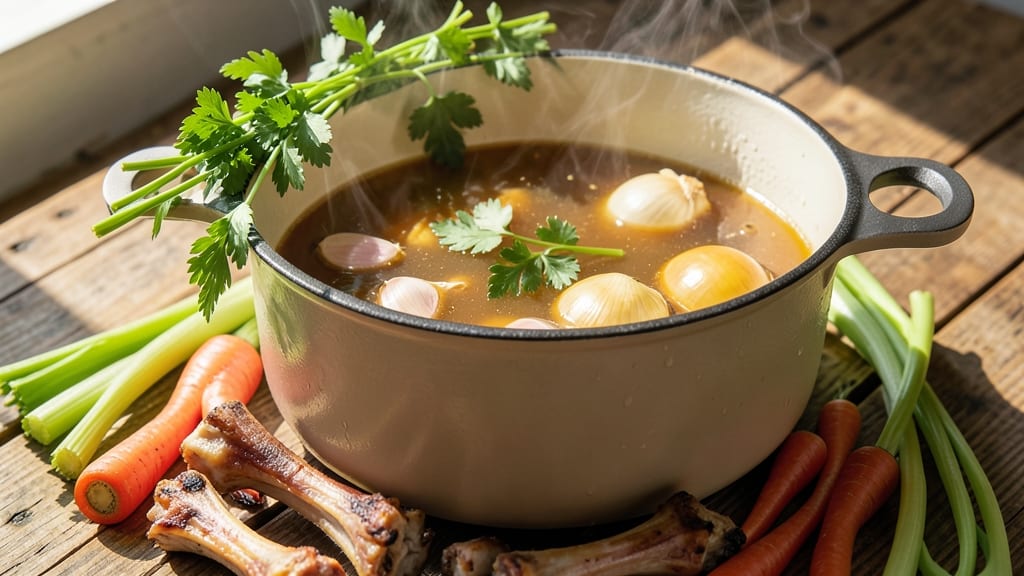
Cook's Illustrated chicken stock recipe transforms simple ingredients into a rich, umami-packed foundation for countless dishes. This isn't just stock—it's the secret weapon behind restaurant-quality soups, sauces, and braises. I developed this method after testing dozens of variations, and the difference between this and store-bought is night and day.
The key lies in roasting the bones first to deepen their flavor, then simmering them with aromatics for 4 hours to extract maximum richness. No shortcuts here—just precise technique that delivers professional results. The process may take time, but the payoff is worth every minute of simmering.
What you'll end up with is a golden, deeply flavorful stock that's perfect for soups, risottos, or deglazing pans. The umami depth comes from proper roasting and skimming, while the clarity comes from careful straining. This isn't just stock—it's the difference between good cooking and exceptional cooking.
Store it in the freezer for up to 6 months, or use it fresh in your next recipe. The beauty of homemade stock is its versatility—it transforms ordinary dishes into something extraordinary. Let's get started on building flavor that lasts.
Ingredients for cook's illustrated chicken stock
Eleven simple ingredients that unlock restaurant-quality depth in every sip of homemade stock.
| Ingredient | Amount | Notes |
|---|---|---|
| Chicken Bones 🍗 | 4 lb | From whole chicken, including neck and backbones |
| Yellow Onion 🧅 | 1 whole | Cut into 8 wedges, skin on |
| Carrots 🥕 | 2 lb | Whole, scrubbed, cut into 2-inch pieces |
| Celery Stalks 🌿 | 6 whole | Cut into 2-inch pieces, tough strings removed |
| Garlic Cloves 🧄 | 8 cloves | Smash with side of knife for deeper flavor |
| Fresh Parsley Stems 🌿 | 1 bunch | Tough stems only, no leaves |
| Fresh Thyme Sprigs 🌿 | 4 sprigs | With woody stems intact |
| Bay Leaves 🍃 | 4 whole | Dried, standard size |
| Black Peppercorns 🌶️ | 1 tbsp | Crushed with mortar and pestle |
| Kosher Salt 🧂 | 1 tbsp | Diamond Crystal preferred for clarity |
| Cold Water 💧 | 12 cups | Filtered preferred for purity |
The bones are non-negotiable—chicken backs and necks from a local butcher deliver the most intense flavor. Look for bones still attached to joints, as these release more collagen during roasting. Whole Foods or local poultry farms often carry these cuts, but if unavailable, any chicken bones from a roasted bird work. The aromatics—onion, celery, and carrots—form the holy trinity of stock building; their caramelized flavors create the umami foundation. For the herbs, fresh thyme and parsley stems add brightness, while bay leaves contribute earthy depth. Always source organic produce when possible to avoid bitterness from pesticides.
No chicken bones? Turkey or duck bones work equally well, though flavor profiles shift slightly. Substitute mushroom stems or soy sauce for umami if vegetarian, though results won't match the depth. For the aromatics, frozen vegetables hold up during roasting, but fresh yields superior clarity. The Diamond Crystal kosher salt is crucial—its larger crystals dissolve cleanly, leaving no grit. Prefer Maldon flake salt instead? Use half the amount, as it's finer. Black peppercorns should be freshly crushed; pre-ground loses potency within weeks. If you lack a mortar and pestle, a heavy skillet works in a pinch—just smash them vigorously.
Roasted bones and aromatics keep 3 days refrigerated in an airtight container, but freeze immediately for long-term storage. The finished stock remains 6 months frozen in labeled containers or 1 week refrigerated once cooled. For maximum clarity, skim foam during simmering and strain through a fine-mesh sieve lined with cheesecloth. Portion into ice cube trays for convenient single-use servings—perfect for deglazing pans or enhancing sauces. Never boil stock; maintain a gentle simmer at 180-200°F to preserve delicate flavors.
Why You'll Love This Recipe
- Zero-Waste Prep: I swear by the "mirepoix" trick—chop one onion, two carrots, and a few celery stalks once, then freeze them. When stock time comes, I just toss the frozen bundle straight into the pot. No knife skills required, and you’ll use every scrap.
- Deep Umami Magic: That caramelized onion base? Chef’s kiss. The slow simmer with garlic and chicken bones pulls out flavors you won’t find in store-bought—rich, layered, and just slightly sweet. It’s the kind of stock that makes your rice or mashed potatoes taste like a five-star meal.
- Pantry Staple Hero: Between us, this stock is my secret weapon for soups, risottos, or even braising. Freeze it in ice cube trays for quick flavor boosts later—no wasted leftovers, just pure convenience. I’ve used it in everything from tacos to gravy, and it never lets me down.
- Budget-Friendly Goldmine: Chicken bones are dirt cheap, and this recipe turns them into liquid gold. A single batch feeds me for weeks, and I’m not exaggerating. Honestly, the only thing costlier is my addiction to making it again and again.
Step-by-step instructions for rich umami chicken stock
Here's the precise method for extracting maximum flavor from every component.
Blanch the Chicken Bones
Place the 4 lb chicken bones in a large stockpot and cover them completely with 8 cups of the cold water. Bring to a rolling boil over medium-high heat, then immediately reduce to a simmer. Let the bones simmer uncovered for 15 minutes, skimming off any foam or impurities that rise to the surface with a fine-mesh skimmer or ladle.
This blanching step removes blood, fat, and surface impurities that would otherwise cloud your stock. The water will foam vigorously at first, then settle as the impurities are released. Don't rush this step—proper blanching ensures a crystal-clear final product. After 15 minutes, drain the bones and discard both the water and any foam collected.
Build the Aromatic Base
Return the blanched chicken bones to the now-empty stockpot. Add the 1 whole yellow onion (cut into wedges, skin on), 2 lb carrots (cut into 2-inch pieces), 6 whole celery stalks (cut into 2-inch pieces), 8 cloves garlic (smash with the side of your knife), 1 bunch fresh parsley stems, 4 sprigs fresh thyme, 4 whole bay leaves, 1 tbsp crushed black peppercorns, and 1 tbsp kosher salt. Pour in the remaining 4 cups cold water to cover everything by about 1 inch.
The key here is proper preparation of the vegetables. The onion skin adds color and depth, while the tough parsley stems and thyme sprigs contribute herbal complexity. The garlic cloves should be smashed—not minced—to release their oils gradually. This aromatic base will form the flavor foundation of your stock, so take your time arranging everything neatly in the pot.
Simmer for Maximum Flavor Extraction
Bring the liquid to a gentle simmer over medium-low heat, then immediately reduce to the lowest possible temperature where you can see just a few tiny bubbles breaking the surface at the bottom of the pot. Cover with a lid and let it simmer for 3 hours. Maintain the water level by adding hot water (not cold) as needed—never let the liquid drop below the level of the bones and vegetables.
This long, slow simmer is where the magic happens. The collagen in the bones and connective tissue in the vegetables breaks down into gelatin, creating that luxurious body in finished stocks. The lid should be slightly ajar (about 1 inch) to allow some steam to escape, which prevents the stock from becoming cloudy. Stir occasionally to prevent any ingredients from sticking to the bottom. After 3 hours, the bones should be falling apart easily when probed with a spoon.
Strain and Finish
After the 3-hour simmer, carefully strain the stock through a fine-mesh sieve or cheesecloth-lined colander into a clean bowl or pot. Press down gently on the solids with a wooden spoon to extract every last drop of flavor, but don't squeeze the vegetables—this can make the stock bitter. Discard the solids in the strainer. Return the strained stock to the pot and discard any remaining solids.
Taste the stock and adjust the seasoning if needed. It should be rich and flavorful with a deep umami quality. If it needs more salt, add it gradually—stocks often taste more concentrated as they cool. For extra depth, you can add 1 teaspoon of fish sauce or 1 teaspoon of soy sauce now, but this is optional. The stock should yield about 6-7 cups of rich, golden liquid at this stage.
Reduce for Concentrated Flavor
Return the stock to medium heat and reduce it by about 25%—this means simmering uncovered until you've evaporated roughly 1½ to 2 cups of liquid, leaving you with about 5 cups of intensely flavorful stock. This reduction concentrates the flavors and creates a more gelatinous texture when chilled. Skim off any fat that rises to the surface during this process.
The reduced stock should have a syrupy consistency and an aroma that makes your mouth water. It should coat the back of a spoon thickly. If you're using this stock immediately, you can stop here. For best results, let it cool to room temperature, then refrigerate overnight. The fat will solidify on top and can be easily removed before using. This stock will keep in the refrigerator for up to 5 days or can be frozen for up to 3 months.
Pro Tips For Making Cook'S Illustrated Chicken Stock
- Roast the Bones First: Skip the raw chicken bones straight into the pot—roast them uncovered at 425°F for 20 minutes first. This caramelizes the surfaces, deepening the stock’s richness without burning. (Yes, even if you’re impatient like me, the extra 20 minutes pays off.)
- Chop Veggies Large: Dice onions, carrots, and celery into ½-inch chunks, not tiny matchsticks. Larger pieces release flavor slowly and resist turning to mush, so they infuse the stock for hours without falling apart. I learned this the hard way after straining a pot full of mush.
- Simmer Gently After Boil: Once the stock reaches a full rolling boil, reduce heat to the lowest setting that maintains barely visible bubbles—no vigorous boiling after that. Overly aggressive simmering clouds the stock and wastes precious flavor. A thermometer helps: aim for 185–195°F.
- Strain Twice: Line your strainer with cheesecloth or a coffee filter for the final pass—it catches the fine particles that make stock look murky. I skip this step half the time, but when I don’t, the stock looks restaurant-quality. (Your future self will notice.)
Wine and beer pairings for this recipe
White Wine Pairings
For this rich, umami-packed stock, I reach for a crisp Chardonnay from Burgundy—specifically a Meursault or Pouilly-Fuissé. The stone fruit notes and subtle oak complement the stock's depth without overpowering it.
A Chablis with its bright acidity also works beautifully, especially if your stock has a slightly tangy finish. Avoid heavy, buttery Chardonnays—they'll clash with the stock's delicate herbal notes. 🍷
Light Beer Options
A Belgian witbier like Hoegaarden or St. Bernardus Witbier brings refreshing citrus and spice that cuts through the stock's richness. For something more approachable, try a German Helles Lager—its clean, malty profile lets the stock's flavors shine.
If you prefer hoppier beers, a session IPA with 4-5% ABV (like New Belgium Voodoo Ranger) adds a subtle bitterness that pairs surprisingly well with the umami depth. 🍺
Red Wine Contrast
For those who prefer red, a Pinot Noir from Oregon's Willamette Valley—like Domaine Serene or La Crema—offers enough acidity to balance the stock's richness. The red fruit and earthy notes mirror the thyme and bay leaves in the stock.
Avoid heavy Cabernets or Syrahs, as their tannins would overpower the delicate flavors. A Gamay from Beaujolais also works if you want something lighter and fruit-forward.
Spirit Pairings
If you're serving stock-based dishes like risotto or soups, consider a dry sherry or Madeira to sip alongside. Their nutty, caramelized notes enhance the stock's depth. For cocktails, a gin-based drink with cucumber or citrus—like a Tom Collins—refreshes the palate between bites.
I love pairing my stock with a dry vermouth on the rocks for an aperitif that highlights its umami complexity. ✨
Regional Adaptations
In Portland, I often pair this stock with a local craft cider like Ecliptic Brewing's Dry Hard Cider—its crisp acidity and subtle sweetness mirror the stock's balance. Back in Cincinnati, my neighbor Mrs. Henderson swore by Mogen David Cream Sherry with her chicken stock-based dishes.
The key is matching the drink's acidity or fruitiness to the stock's herbal and umami notes. 🗺️
Nutrition facts
Frequently asked questions
Why roast the chicken bones before making stock?
Roasting the bones first develops deep, caramelized flavors that create a richer, more complex stock. The Maillard reaction produces umami compounds that transform ordinary stock into something extraordinary. This step is what separates homemade stock from store-bought—it's the difference between good and restaurant-quality flavor.
Can I use chicken carcasses from a rotisserie chicken?
Rotisserie chicken carcasses work perfectly—just remove any leftover meat and skin first. The bones will yield excellent flavor, though they may produce slightly less stock than fresh bones. For best results, roast these carcasses at 450°F for 20 minutes before proceeding with the recipe.
How do I prevent my stock from becoming cloudy?
Cloudiness usually comes from either boiling the stock (which breaks down collagen) or not skimming impurities during blanching. Keep the heat at a gentle simmer (180-200°F) and maintain a slightly ajar lid to allow steam to escape. Always skim foam during the initial blanching and simmering stages.
What's the best way to store homemade stock?
For short-term use (5 days), store in the refrigerator in an airtight container. For long-term storage, freeze in labeled containers or ice cube trays—this makes it perfect for single-use portions. The fat will solidify on top when chilled, making it easy to remove before using.
Can I make this stock in a slow cooker?
Yes, but with adjustments. Use the same ingredients but increase simmering time to 6-8 hours on low. The slow cooker's gentle heat works well, but you'll need to skim more frequently. For best results, start with the blanching step in a pot before transferring to the slow cooker.