
Appetizers
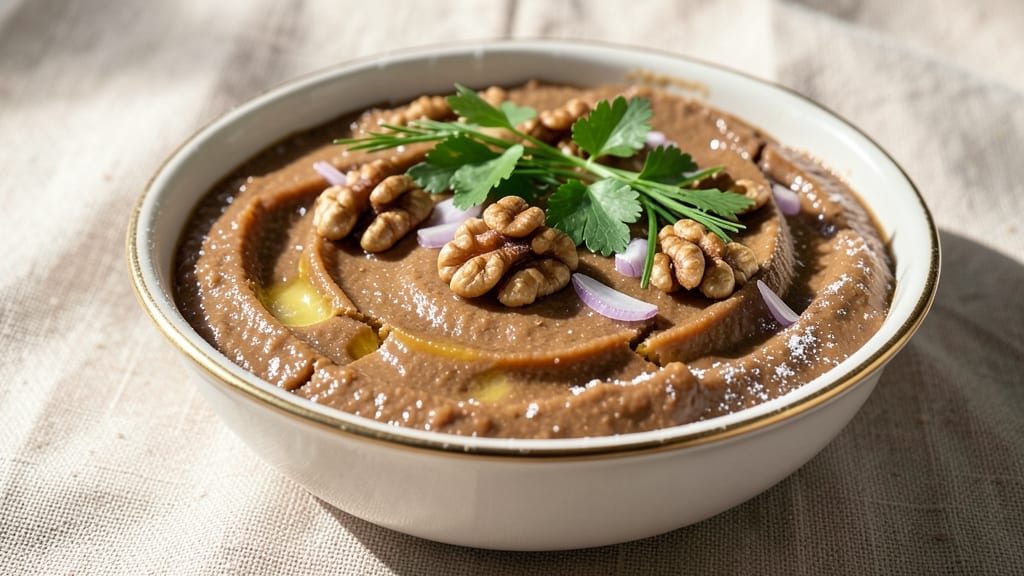
This baked chicken liver pâté recipe delivers the luxurious texture and rich flavor that makes it a showstopper at any gathering.
The secret lies in perfectly seared livers, blended with nutty depth from toasted walnuts and aromatic herbs that create a velvety spread with just the right balance of earthy and savory notes. I've refined this technique over years to ensure every batch achieves that signature silky smoothness.
What sets this recipe apart is the combination of traditional methods with modern convenience—whether you bake it in the oven or use a sous-vide approach, the result is consistently luxurious.
The pâté develops its signature richness through careful cooking and blending, while the herbs and shallots add layers of complexity that elevate it beyond basic liver spreads. This isn't just an appetizer; it's a flavor experience that transforms any meal.
The final product is a silky smooth spread with a vibrant golden hue, where every bite delivers that perfect harmony of tender liver, nutty walnuts, and bright herbs.
It's the kind of dish that makes you feel like you're dining at a sophisticated bistro, yet it's entirely achievable at home with the right technique. The best part? It keeps beautifully for days, making it ideal for entertaining or meal prep.
Serve it on crispy toast points, with crusty bread, or as part of a charcuterie board—this pâté will be the star of any occasion. The recipe balances precision with flexibility, so you can adapt it to your preferences while maintaining that restaurant-quality result. Let's create something truly special.
Ingredients for baked chicken liver pate
Luxurious ingredients that transform simple livers into a velvety pâté fit for any sophisticated gathering.
| Ingredient | Amount | Notes |
|---|---|---|
| Fresh Chicken Livers 🍗 | 1 lb | Trimmed of connective tissue |
| Unsalted Butter 🧈 | ½ cup | Cold, cubed for searing |
| Walnuts 🥜 | ½ cup | Toasted until fragrant |
| Shallots 🧅 | 4 whole | Finely minced, vibrant color |
| Fresh Tarragon 🌿 | ¼ cup | Chopped, stems removed |
| Fresh Parsley 🌿 | ¼ cup | Flat-leaf, finely chopped |
| Dijon Mustard 🍯 | 1 tbsp | High-quality, smooth texture |
| Heavy Cream 🥛 | ¼ cup | Full-fat for richness |
| Dry White Wine 🍷 | ½ cup | Sauvignon Blanc preferred |
| Diamond Crystal Kosher Salt 🧂 | 1 tsp | For seasoning and curing |
| Freshly Ground Black Pepper 🌶️ | ½ tsp | Coarsely cracked |
| Granulated Sugar 🍚 | 1 tsp | Balances acidity |
| Extra-Virgin Olive Oil 🫒 | 1 tbsp | For finishing and blending |
The quality of your chicken livers is non-negotiable—look for bright red, firm livers with minimal connective tissue. Whole Foods or trusted butchers are ideal sources, where you can select the freshest cuts. Trim any visible membranes or blood vessels before using; these can create bitterness. For the walnuts, toast them in a dry pan until fragrant—this enhances their nutty depth significantly. Fresh herbs like tarragon and parsley are essential; dried substitutes lack the brightness this recipe demands. The shallots should be finely minced to dissolve into the pâté without texture, so take the time with this step.
No fresh tarragon? Dried tarragon at one-third the amount works, though it won't replicate the freshness. Substitute parsley with chives or cilantro if needed, but reduce to half the quantity. For the wine, dry vermouth or additional white wine vinegar can replace the white wine if unavailable. The butter must be cold when searing the livers—microwave 20 seconds to soften slightly before using. If you prefer a lighter texture, reduce the heavy cream to 2 tablespoons and add an extra splash of wine. The Dijon mustard should be smooth, not grainy; Maille or Amora are reliable brands for this purpose.
This pâté develops its signature richness over time, so reheat gently in a water bath to preserve its silky texture. Store in an airtight container with a thin layer of olive oil on top to maintain moisture; it keeps for up to 5 days in the fridge or 3 months frozen. For entertaining, portion into small ramekins and chill—this makes serving effortless. The pâté tastes even better the next day as flavors meld, so plan ahead for gatherings. If making ahead, freeze the final blend before adding the cream to prevent separation.
Why You'll Love This Recipe
- One-Pan Magic: I swear by this recipe because it’s that simple—just toss the livers, butter, and shallots into a dish, bake, then fold in the walnuts and tarragon at the end. No blender, no fuss, no cleanup beyond one pan.
- Rich Without Effort: The butter and walnuts turn the livers into something luxurious, but honestly? It’s the tarragon that makes it sing—bright, herbal, and just sweet enough to balance the richness. (Yes, even if you’re not a liver lover.)
- Weeknight or Holiday: Between us, this is my go-to for dinner parties and lazy Mondays. Serve it with crusty bread for a fancy spread, or slap it on toast for a 10-minute breakfast. The same recipe, two vibes.
- Budget Luxury: Chicken livers are cheap, but they taste like a splurge. A pound feeds four, and leftovers? Perfect for crostini the next day or stuffed into puff pastry for a last-minute appetizer. Smart spending, every time.
Step-by-step instructions for baked chicken liver pâté
Transform rich chicken livers into a velvety pâté with perfect texture and balanced flavors.
Prepare the Chicken Livers and Base Ingredients
Begin by trimming any connective tissue from the 1 lb fresh chicken livers and pat them completely dry with paper towels. This step is crucial—excess moisture will create steam during cooking instead of rendering fat. Cut the livers into ¼-inch thick slices for even cooking.
In a separate bowl, combine the 0.5 cup walnuts and toast them in a dry skillet over medium heat for 5-6 minutes until fragrant and golden. Remove from heat immediately and let cool slightly. Finely chop the toasted walnuts for later use. Meanwhile, mince the 4 whole shallots into a fine, almost paste-like consistency—they should disappear almost completely when added to the pâté.
Sear the Livers and Build the Flavor Foundation
Heat 1 tablespoon extra-virgin olive oil in a large skillet over medium-high heat. Add the sliced chicken livers in a single layer and sear for 2-3 minutes per side until they develop a deep golden-brown crust. The livers should be cooked through but still slightly pink in the center—they'll finish cooking in the oven.
Remove the livers from the skillet and set aside. In the same pan, add the 0.5 cup cold, cubed unsalted butter and melt over low heat, whisking constantly until the butter turns a pale golden color. This creates a rich, nutty base for your pâté. Add the minced shallots and cook for 2 minutes until softened, then stir in the 1 tbsp Dijon mustard and 1 tsp granulated sugar to balance flavors.
Deglaze and Combine All Ingredients
Pour in the 0.5 cup dry white wine and scrape up any browned bits from the bottom of the pan—this is where all the deep, savory flavor hides. Let the wine reduce by half, about 3-4 minutes, until it's almost completely evaporated but still slightly syrupy.
Return the seared chicken livers to the skillet along with the toasted, chopped walnuts. Add the 0.25 cup chopped fresh tarragon, 0.25 cup chopped fresh parsley, 1 tsp Diamond Crystal kosher salt, and 0.5 tsp freshly ground black pepper. Stir gently to combine all ingredients, ensuring the livers are well-coated in the butter mixture.
Bake to Silky Perfection
Transfer the entire mixture to a greased 8x8-inch baking dish and spread it into an even layer. Pour the 0.25 cup heavy cream evenly over the top, then cover the dish tightly with aluminum foil. Bake in a preheated 350°F oven for 30-35 minutes until the pâté is just set but still slightly jiggly in the center.
Remove from the oven and let the pâté rest for 10 minutes before serving. This resting period allows the flavors to meld and the texture to become perfectly smooth. The pâté should have a velvety consistency with a glossy sheen—if it's too thick, stir in a splash of warm water or additional cream to reach your desired spreadable texture.
Pro Tips For Making Baked Chicken Liver Pate
- CHILL THE LIVERS FIRST: I learned this the hard way—skipping the ice bath after trimming makes them bleed like crazy when cooking. Toss them in cold water for 10 minutes before patting dry, or you’ll end up with a watery pate instead of a rich, velvety one.
- TOAST WALNUTS LOW AND SLOW: After burning three batches, I finally figured out walnuts need gentle heat. Spread them on a baking sheet at 300°F (150°C) for 8–10 minutes, stirring once, until fragrant but not browned. Overcooking turns them bitter—trust the smell over the color.
- SWEAT SHALLOTS UNTIL SOFT: This isn’t the prettiest method, but it’s the tastiest. Cook shallots in butter over medium-low for 15 minutes until they’re almost caramelized and completely limp—no crisp edges. That extra time removes their sharp bite and builds deep flavor.
- PRESS THE PATE HARD: Sounds weird, but it works: pack the finished mixture into the ramekins with a spoon, then press down firmly with a glass or your palm. This prevents it from collapsing during baking and gives you a clean, sliceable texture. (Your future self will thank you.)
Creative variations of these flavors
Herb-Infused Variations
Swap the tarragon for fresh thyme or rosemary to create a Mediterranean twist—these herbs add earthy depth that pairs beautifully with the liver's richness. I love using ½ cup fresh thyme plus ¼ cup chopped rosemary for a fragrant, aromatic pâté.
For a brighter profile, add 1 tbsp lemon zest to the shallots while cooking—it cuts through the fat and adds a refreshing lift. 🌿
Spiced Walnut Adaptation
Toast the walnuts with ½ tsp smoked paprika and ¼ tsp cayenne pepper before chopping for a subtle smoky heat that transforms the pâté into a bold, slightly spicy spread. The paprika enhances the nutty depth while the cayenne adds just enough kick to balance the creaminess.
For extra warmth, fold in 1 tsp ground coriander with the herbs—it harmonizes beautifully with the liver's natural flavors.
Vegetarian Twist
Replace the chicken livers with 1 lb finely chopped mushrooms (cremini or shiitake) and ½ cup cooked lentils for a vegetarian version that retains the pâté's luxurious texture. Sauté the mushrooms until deeply browned and add 1 tbsp soy sauce to deepen their umami.
The walnuts and cream remain key for that signature richness, though you may need to add 1 extra tbsp Dijon mustard to bind the mixture. 🌱
Smoked Sous-Vide Option
For a modern approach, sear the livers in a skillet, then vacuum-seal them with the butter, shallots, and wine in a 225°F water bath for 1 hour. After cooking, blend the mixture with the walnuts, herbs, and cream for an ultra-smooth, restaurant-quality result.
The slow cooking method preserves moisture and enhances tenderness, while the sous-vide process eliminates the need for baking. Perfect for a foolproof, elegant pâté every time. ⚡
Sweet and Savory Fusion
Add 2 tbsp apricot jam or 1 tbsp honey to the butter-shallot mixture while cooking to create a sweet-savory balance that's irresistible. The fruitiness complements the liver's richness while the walnuts add crunch.
For extra texture, fold in 2 tbsp toasted pine nuts at the end. This variation works especially well when served with brioche toast points or as a filling for croissants. 🍯
Global Flavor Profiles
Transform this pâté into a French-inspired version by adding 1 tsp brandy to the wine reduction and garnishing with chopped chives before serving. For an Italian touch, stir in ½ cup sun-dried tomatoes (finely chopped) and 1 tsp dried oregano with the herbs.
Each adaptation keeps the core technique intact while introducing exciting cultural influences that elevate the dish. 🗺️
Nutrition facts
Frequently asked questions
Why do my chicken livers turn out bitter?
Bitterness comes from blood or connective tissue left on the livers. Always trim all visible membranes and blood vessels before cooking. For extra insurance, soak the cleaned livers in cold water with 1 tbsp lemon juice for 10 minutes before searing—this helps remove any lingering bitterness. Never overcook them either; they should be just pink in the center when finished.
Can I make this pâté ahead of time?
This pâté tastes even better after resting. Prepare it up to 2 days ahead and refrigerate in an airtight container with a thin layer of olive oil on top. For longer storage, freeze the finished pâté (before adding cream) for up to 3 months. Thaw overnight in the fridge and stir in fresh cream when ready to serve.
What's the best way to serve this pâté?
Spread it on toasted baguette slices or crusty bread for classic presentation. For elegance, serve in small ramekins with a drizzle of olive oil and cracked pepper. It also works beautifully as a filling for puff pastry or phyllo cups. Pair with chilled white wine or sparkling water with lemon to complement the rich flavors.
Can I substitute duck or pork livers?
Yes, but adjust cooking times slightly. Duck livers are richer and may need 1-2 minutes less searing time, while pork livers are leaner and should be cooked to 160°F internal temp. For duck, reduce the butter to 0.3 cup to balance the natural fat content. Pork livers work well but may need an extra 1 tbsp cream for moisture.
What if my pâté is too thick or too thin?
For a thick pâté, stir in 1-2 tbsp warm water or broth until smooth. If too thin, simmer uncovered for 5 minutes to reduce. For extra insurance, blend the mixture for 30 seconds before baking—this helps control final texture. The ideal consistency should be spreadable but hold its shape when chilled.