
Main Courses
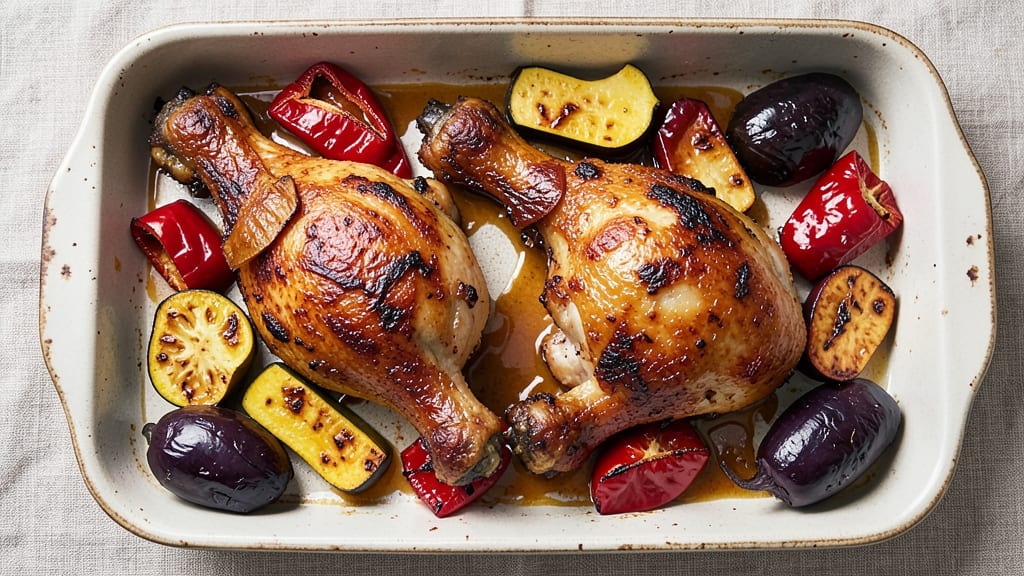
This baked chicken legs with vegetables recipe delivers crisp golden skin and caramelized roots in one simple sheet pan. The honey glaze creates a sticky, sweet-savory crust that locks in juices, while the vegetables roast until tender and slightly charred.
I developed this method after years of testing—it’s foolproof for weeknight dinners or meal prep. The secret lies in the high-heat bake (425°F) that renders fat from the chicken skin while searing the vegetables.
A dry rub of paprika and garlic powder adds depth, and the honey glaze caramelizes beautifully without burning. You’ll end up with juicy, flavorful chicken and vegetables that taste like they’ve been slow-roasted for hours.
What makes this recipe stand out is how little effort it requires—just 20 minutes of prep and 45 minutes of baking. The vegetables (carrots, potatoes, and onions) roast alongside the chicken, absorbing the glaze’s sweetness while developing their own caramelized edges.
It’s the kind of meal that tastes impressive but comes together effortlessly. Serve with a sprinkle of fresh parsley or a squeeze of lemon for brightness. This dish pairs perfectly with crusty bread or a simple green salad. Let’s get cooking!
Ingredients for baked chicken legs with vegetables
Twelve ingredients transform into a restaurant-worthy sheet pan dinner with minimal effort.
| Ingredient | Amount | Notes |
|---|---|---|
| Chicken Legs (Thigh-Drumstick) 🍗 | 4 whole | Bone-in, skin-on for crisp skin |
| Honey 🍯 | ¼ cup | Raw or regular, unprocessed |
| Mustard (Dijon) 🍯 | 1 tbsp | For tangy depth in glaze |
| Garlic Powder 🧄 | 1 tbsp | Freshly ground preferred |
| Paprika (Smoked) 🌶️ | 1 tbsp | For rich, smoky flavor |
| Salt (Kosher) 🧂 | 1 tsp | Diamond Crystal preferred |
| Black Pepper 🌶️ | ½ tsp | Freshly cracked for intensity |
| Yellow Onions 🧅 | 1 whole | Cut into 1-inch chunks |
| Carrots 🥕 | 1 lb | Whole, scrubbed, cut into sticks |
| Baby Potatoes 🥔 | 1 ½ lb | Halved, skin-on for texture |
| Olive Oil (Extra-Virgin) 🫒 | 2 tbsp | For tossing vegetables |
| Fresh Parsley 🌿 | ⅛ cup | Chopped, for garnish |
| Lemon Juice 🍋 | 1 tbsp | Freshly squeezed |
The chicken legs are the foundation—bone-in and skin-on for maximum flavor and crisp skin. Look for legs with a good layer of fat between the skin and meat at Whole Foods or your local butcher shop; this fat renders beautifully during baking. If using frozen, thaw overnight in the fridge. The vegetables should be firm and vibrant: bright orange carrots, creamy yellow onions, and small, waxy potatoes—all available at any grocery store’s produce section. Fresh herbs like parsley elevate the dish, but dried works in a pinch if you’re short on time.
No honey? Maple syrup or agave nectar works in a 1:1 ratio, though the flavor will be slightly different. Substitute smoked paprika with regular paprika plus a pinch of liquid smoke for a similar effect. For the vegetables, swap carrots for parsnips or sweet potatoes if preferred, but keep the cut size consistent. If you’re avoiding mustard, a splash of apple cider vinegar adds the same tang. Prep the vegetables first—they’ll need 20 minutes of roasting time before the chicken goes in, so get a head start while the oven preheats.
This dish reheats beautifully—4-5 days in the fridge or 3 months frozen—making it ideal for meal prep. Store components separately: chicken in one container, vegetables in another, and glaze in a small jar. To reheat, cover with foil and warm at 350°F for 15-20 minutes. The honey glaze will thicken slightly upon reheating, so a quick drizzle of water and reheat ensures it stays glossy. Serve with crusty bread to soak up the caramelized juices.
Why You'll Love This Recipe
- Here’s what sold me: that perfect glaze where the honey caramelizes into a glossy finish, but the Dijon mustard cuts through with tang. The smoked paprika adds this deep, smoky warmth that makes every bite feel like a hug—especially when the skin gets crispy and the meat stays juicy.
- One-Pan Magic: Honestly, I swear by this—just toss the chicken legs, chopped veggies, and that sticky honey-mustard mix onto one sheet pan. No pots, no pans, no stress. The garlic powder and smoked paprika work their flavor magic while you’re scrolling through your phone, waiting for the oven timer.
- Sweet-Savory Balance: Here’s what sold me: that perfect glaze where the honey caramelizes into a glossy finish, but the Dijon mustard cuts through with tang. The smoked paprika adds this deep, smoky warmth that makes every bite feel like a hug—especially when the skin gets crispy and the meat stays juicy.
- Weeknight Workhorse: Between us, this is my go-to when I need something fast but still impressive. Serve it with rice for a family dinner, wrap it in tortillas for lunch the next day, or even toss the leftovers into a salad. The flavors only get better as they sit, so you’re basically getting double the meal for half the effort.
Step-by-step instructions for honey-glazed chicken legs with caramelized vegetables
Here's the method for golden, crisp-skinned chicken legs paired with tender, caramelized vegetables.
Prepare the Chicken and Seasoning
Pat the 4 whole chicken legs dry with paper towels—this is critical for crispy skin. Remove any excess fat from the skin pockets using your fingers. In a small bowl, whisk together the 0.25 cup honey, 1 tablespoon Dijon mustard, 1 tablespoon garlic powder, 1 tablespoon smoked paprika, 1 teaspoon kosher salt, and 0.5 teaspoon black pepper until fully combined. This creates a sticky, flavorful glaze that will caramelize beautifully.
Place the chicken legs skin-side up on a wire rack set over a baking sheet. This allows hot air to circulate underneath, ensuring crisp skin all around. Brush the honey-mustard mixture generously over each piece, coating both the skin and meat. Let the chicken sit at room temperature for 15 minutes while you prepare the vegetables—this helps the skin render fat more evenly.
Prep and Toss the Vegetables
Cut the 1 whole yellow onion into 1-inch chunks and scrub the 1 pound carrots, cutting them into 3-inch sticks. Halve the 1.5 pounds baby potatoes lengthwise, leaving the skins on for texture. In a large bowl, toss the vegetables with the 2 tablespoons extra-virgin olive oil, 1 teaspoon kosher salt, and 0.25 teaspoon black pepper until evenly coated. Spread them in a single layer on a separate baking sheet.
The vegetables should be evenly spaced to allow for proper caramelization. If they're crowded, they'll steam instead of brown. I like to arrange them in a single layer with the cut sides facing up—this helps them develop a deeper color and sweetness during baking.
Bake the Chicken to Golden Perfection
Preheat your oven to 375°F. Place the chicken legs on the lower rack of the oven and bake for 45 minutes. After 30 minutes, flip the chicken legs over and brush them with any remaining honey glaze from the baking sheet. This ensures the skin remains crispy and the meat stays juicy.
You'll know the chicken is ready when the skin is deep golden brown and crispy, and an instant-read thermometer inserted into the thickest part of the thigh (avoiding bone) reads 165°F. The skin should crackle when touched, and the meat should pull away from the bone easily with gentle pressure.
Caramelize the Vegetables
While the chicken bakes, transfer the vegetable tray to the upper rack of the oven and bake for 35-40 minutes, stirring once halfway through. The vegetables should be tender and deeply caramelized, with golden edges and a sweet, concentrated flavor. The potatoes should be fork-tender, and the carrots should have softened slightly while still holding their shape.
If the vegetables are browning too quickly, tent them loosely with aluminum foil to prevent burning. The goal is to achieve a balance of caramelization and tenderness—vegetables that are too soft will lose their texture and sweetness.
Finish and Serve
Remove the chicken from the oven and let it rest for 5 minutes before serving. This allows the juices to redistribute, ensuring every bite is moist and flavorful. Sprinkle the chopped 0.125 cup fresh parsley and drizzle with 1 tablespoon freshly squeezed lemon juice over the chicken and vegetables just before serving.
The lemon juice brightens the dish, cutting through the richness of the honey glaze and adding a refreshing finish. Serve the chicken legs with the caramelized vegetables directly on the baking sheet for easy sharing. Each bite should deliver crispy, flavorful skin, tender meat, and sweet, tender vegetables in perfect harmony.
Pro Tips For Making Baked Chicken Legs With Vegetables
- Preheat Like a Boss: Your oven needs to hit 425°F (220°C) and sit for 10-15 minutes before the chicken goes in—no exceptions. I learned this the hard way when my first batch came out soggy because the pan took forever to heat up. That’s the temp where the honey caramelizes and the paprika gets actually smoky, not just dusty.
- Dry the Skin First: Pat those chicken legs thoroughly with paper towels before you even think about seasoning. Moisture is the enemy of crispy skin, and this recipe relies on that honey-mustard glaze sticking to a dry surface. Skip this, and you’ll end up with sticky, uneven browning—trust me, I’ve done it.
- Mix Mustard Into Honey: Whisk 1 tablespoon Dijon into the honey before brushing it on the chicken. That’s how you get a glossy, clingy glaze that doesn’t drip off halfway through baking. I used to just layer them, and half the sweetness pooled at the bottom of the pan—wasted effort.
- Rotate the Pan Mid-Bake: After 20 minutes, swap the top and bottom racks and rotate the pan 180 degrees. This ensures the legs cook evenly—no one wants a batch where half is golden and half is raw. The vegetables get crispy edges too, which is a nice bonus you’ll notice if you actually move the pan.
Regional styles of these flavors
Southern Comfort Style
In the South, this dish gets a smoky twist using hot sauce instead of Dijon mustard in the glaze. Swap the honey for ½ cup apple cider vinegar and add 1 tbsp hot sauce (like Crystal or Tabasco) to the glaze.
Serve with cornbread and collard greens for a full Southern spread. The acidity from the vinegar balances the sweetness beautifully, and the heat from the hot sauce gives it that classic Southern kick. 🌶️
Mediterranean Herb Version
For a Mediterranean-inspired take, replace the smoked paprika with 1 tbsp dried oregano and 1 tsp dried thyme, and add 1 minced garlic clove to the honey glaze. Toss the vegetables with 1 tsp dried rosemary before roasting.
Finish with a sprinkle of feta cheese and a drizzle of olive oil before serving. This version pairs perfectly with a Greek salad or warm pita bread.
Asian-Inspired Glaze
Transform this dish into an Asian fusion by replacing the honey with ¼ cup soy sauce and 2 tbsp hoisin sauce, then adding 1 tbsp grated fresh ginger and 1 tbsp sesame oil to the glaze. Use sliced bell peppers and snow peas instead of carrots and potatoes.
Garnish with sesame seeds and sliced green onions for a dish that’s both sweet and savory. Serve with steamed jasmine rice for a complete meal. 🍜
Herb-Infused Vegetable Variations
Swap out the onions, carrots, and potatoes for asparagus, Brussels sprouts, and fingerling potatoes tossed with 1 tbsp fresh thyme and 1 tsp grated lemon zest. The herbs add a bright, aromatic note that complements the honey glaze.
For a heartier dish, add sliced mushrooms to the vegetable mix—they absorb the glaze beautifully and add an earthy depth. 🌿
Spicy Cajun Twist
Give this recipe a Cajun flair by adding 1 tbsp Cajun seasoning (like Tony Chachere’s) to the dry rub and ½ tsp cayenne pepper to the honey glaze. Serve with dirty rice or blackened red beans for a Louisiana-inspired feast.
The Cajun spices add a fiery kick that pairs perfectly with the sweet, sticky glaze. Trust me, the heat will make this dish unforgettable! 🔥
Nutrition facts
Frequently asked questions
Can I use chicken thighs instead of drumsticks for this recipe?
Chicken thighs work beautifully and may even be juicier since they contain more fat. For best results, use bone-in, skin-on thighs and adjust the baking time to 50-55 minutes (they cook slightly faster than drumsticks). The crispy skin and tender meat will be just as delicious.
What vegetables can I substitute if I don't have carrots, onions, or potatoes?
This recipe is flexible—try sweet potatoes, butternut squash, or zucchini for the potatoes. Swap carrots for parsnips or green beans, and onions can be replaced with bell peppers or mushrooms. Just keep the cut size consistent for even cooking.
Why is my chicken skin not crispy?
This usually happens if the chicken isn't patted dry before baking or if the oven isn't hot enough. First, ensure you're using bone-in, skin-on legs and pat them completely dry with paper towels. Preheat your oven to 425°F (not 375°F) and place the chicken on a wire rack to allow air circulation underneath.
Can I make this recipe ahead of time for meal prep?
Yes! Store the cooked chicken and vegetables separately in airtight containers for up to 4-5 days in the fridge. To reheat, cover with foil and warm at 350°F for 15-20 minutes. The honey glaze may thicken slightly—drizzle with a little water and reheat to restore its glossy texture.
How do I know when the chicken is fully cooked?
Use an instant-read thermometer to check the thickest part of the thigh (avoiding bone). The chicken is safe to eat when it reaches 165°F. The skin should also be deep golden brown and crackle when touched, while the meat should pull away from the bone easily with gentle pressure.