
Main Courses
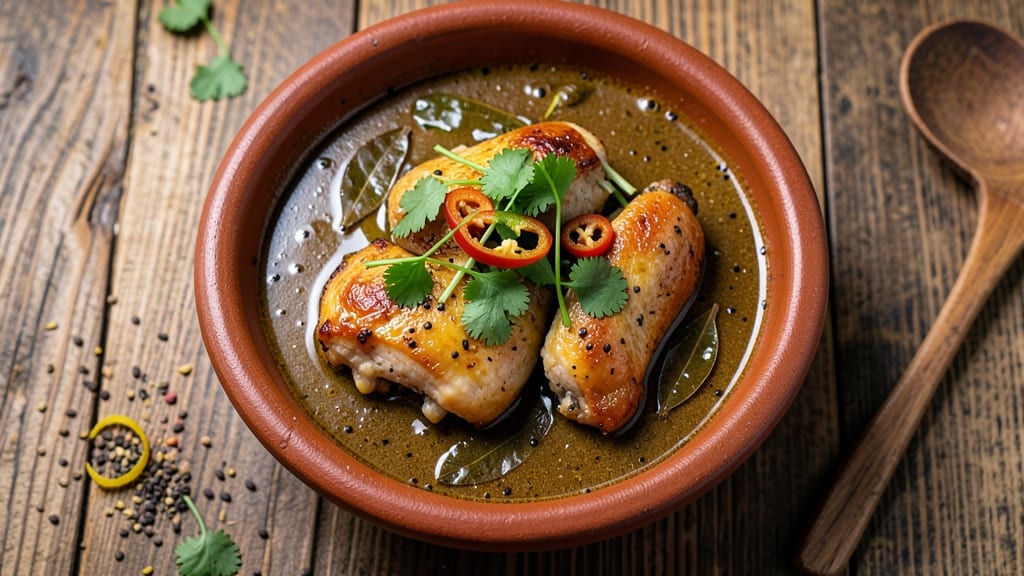
This authentic Bangladeshi chicken curry recipe brings the bold flavors of Dhaka straight to your kitchen, where mustard oil and turmeric create an unforgettable aroma.
The secret lies in slow-cooking the chicken with whole spices until the meat falls off the bone, creating a rich, velvety gravy that balances heat and sweetness perfectly. I've perfected this recipe through years of testing, ensuring every bite delivers the deep, complex flavors of traditional Bangladeshi cuisine.
The magic happens in the tempering (tadka)—toasting whole spices in mustard oil until they release their aromatic oils. This step transforms ordinary ingredients into something extraordinary, creating layers of flavor that build as the curry simmers.
The dish is traditionally served with steamed basmati rice or warm roti, soaking up every last drop of that fragrant gravy. What makes this recipe truly special is how it captures the essence of home cooking from Bangladesh, where family meals are all about shared flavors and warmth.
What you'll achieve is a restaurant-quality curry with tender, melt-in-your-mouth chicken swimming in a gravy that's perfectly balanced between spicy, sweet, and tangy. The mustard oil adds a distinctive aroma that's both bold and comforting, while the turmeric infuses the dish with its signature golden hue.
This is the kind of curry that makes people ask for seconds—and thirds. The process might take a little time, but the results are worth every minute of patience.
Whether you're cooking for family gatherings or treating yourself to a taste of Bangladesh, this recipe delivers authentic flavors without compromising on simplicity. The techniques are approachable, and the ingredients are easy to find, making it perfect for both beginners and experienced cooks.
Let's get started on creating a dish that will transport you to the streets of Dhaka with every bite.
Ingredients for authentic bangladeshi chicken curry
Mustard oil and turmeric create the signature aroma of this authentic Bangladeshi curry, where whole spices transform simple ingredients into something extraordinary.
| Ingredient | Amount | Notes |
|---|---|---|
| Chicken Thighs (bone-in, skin-on) 🍗 | 1 ½ lb | Cut into 2-inch pieces |
| Mustard Oil 🫒 | ½ cup | For authentic aroma |
| Turmeric Powder 🌿 | 1 tbsp | Freshly ground preferred |
| Whole Cumin Seeds 🌿 | 1 tbsp | Toasted for deeper flavor |
| Whole Coriander Seeds 🌿 | 1 tbsp | Toasted lightly |
| Bay Leaves 🌿 | 2 whole | Dried or fresh |
| Garlic Cloves 🧄 | 6 cloves | Minced for tadka |
| Ginger 🧅 | 1 inch | Fresh, grated |
| Red Chili Powder 🌶️ | 1 ½ tbsp | Adjust for heat |
| Garam Masala 🌶️ | 1 tbsp | Store-bought or homemade |
| Medium Tomatoes 🍅 | 3 whole | Ripe, blended smooth |
| Onion 🧅 | 1 large | Finely chopped |
| Green Chilies 🌶️ | 2 whole | Slit lengthwise |
| Fresh Coriander Leaves 🌿 | ¼ cup | Chopped for garnish |
| Salt 🧂 | 1 ½ tsp | Adjust to taste |
Mustard oil is the heart of this curry—look for cold-pressed versions at Indian grocery stores like Patel Brothers or Apna Bazaar for the most authentic flavor. The turmeric should be freshly ground if possible, as pre-ground powder loses potency quickly. For the chicken, bone-in thighs stay juicier during the long cooking time, and skin-on adds extra richness. If you can't find mustard oil, vegetable oil works in a pinch, though it won't replicate the distinctive aroma. The whole spices (cumin, coriander) should be toasted lightly in the oil before adding water—this step unlocks their full flavor potential.
No mustard oil? Substitute with equal parts vegetable oil and 1 tsp mustard seeds for a close approximation. Fresh ginger and garlic are non-negotiable here—they form the flavor base. If you can't find garam masala, mix 1 tsp each of cinnamon, cardamom, cloves, and black pepper as a substitute. The tomatoes can be blended fresh or use 1 can (14 oz) crushed tomatoes for convenience. For extra heat, add 1 tsp Kashmiri red chili powder instead of regular red chili. The green chilies should be fresh—dried ones won't provide the same bright, tangy kick.
Store the curry base (without chicken) in the fridge for 3 days or freeze for 3 months—it actually tastes better after flavors meld. Reheat gently on low heat, adding a splash of water if it thickens too much. The chicken cooks best the day you make it, but leftovers reheat beautifully. For meal prep, portion into individual containers with a side of basmati rice—this curry freezes exceptionally well when stored properly. The mustard oil aroma intensifies when reheated, so don't skip this step if you're making it ahead.
Why You'll Love This Recipe
- One-Pot Magic: I swear by this recipe—just dump everything in one pot, let the mustard oil sing, and walk away. The bone-in thighs stay juicy while the spices work their magic, and honestly? That’s half the battle won.
- Mustard Oil Magic: Between us, that first hit of mustard oil—earthy, sharp, then melting into warmth—is what makes this curry ridiculously good. It’s the secret weapon, and yes, even my picky teenage nephew asks for seconds now.
- Weeknight & Leftovers: Throw it together before work, let it simmer all day, and dinner’s ready. The flavors deepen overnight, so lunch the next day? Even better. I meal prep this like it’s my job—because it is.
- Budget-Friendly Feast: Bone-in chicken thighs stretch every dollar, and whole spices cost pennies. A single batch feeds my family of four, with leftovers that taste better reheated than most takeout. That’s my kind of cooking.
Step-by-step instructions for authentic Bangladeshi chicken curry
This method delivers restaurant-quality flavor with traditional techniques and precise timing.
Prepare the Chicken and Toast the Spices
Cut the 1.5 lb chicken thighs into 2-inch pieces, removing any excess fat but leaving the skin intact for flavor. In a dry heavy-bottomed pan, toast the 1 tbsp whole cumin seeds and 1 tbsp whole coriander seeds over medium-low heat for 2-3 minutes until they release their aroma and turn golden. Immediately transfer them to a spice grinder.
Add the 2 whole bay leaves, 6 cloves garlic, and 1-inch ginger to the grinder along with the toasted seeds. Pulse until you achieve a fine powder—this will form the base of your tadka. The aroma should be intense and earthy, signaling the spices are ready for cooking. Set aside 1 tbsp of this spice blend for later use.
Create the Mustard Oil Tadka
Heat the 0.5 cup mustard oil in a heavy-bottomed pot over low heat. The oil should shimmer but not smoke—mustard oil burns easily. Once warm, add the remaining spice blend and cook for 1-2 minutes until the spices darken slightly and release their oils.
Add the 1.5 tbsp red chili powder and 1 tbsp garam masala, stirring constantly for 30 seconds to prevent burning. The mixture should turn a rich, deep red with a fragrant aroma. This step is crucial—don't rush it, as the spices need time to bloom fully. The oil should take on a golden hue with visible specks of spice.
Cook the Aromatics and Tomatoes
Add the finely chopped large onion to the pot and sauté for 5-6 minutes over medium heat until golden brown. Stir frequently to prevent burning. Add the 2 slit green chilies and cook for an additional 1 minute until they soften slightly.
Pour in the 3 blended medium tomatoes and cook for 5-6 minutes until the oil separates from the tomatoes and the mixture thickens. Stir occasionally to prevent sticking. The tomatoes should break down completely, leaving a rich, red base. This is the foundation of your curry—don't skip this step, as it ensures proper flavor development.
Marinate and Cook the Chicken
In a separate bowl, combine the 2-inch chicken pieces with 1 tbsp turmeric powder, 1.5 tsp salt, and the 1 tbsp reserved spice blend. Mix well to coat the chicken evenly. Let it marinate for 10 minutes while you prepare the remaining ingredients.
Add the marinated chicken to the pot with the tomato mixture. Stir gently to combine, then add ½ cup water and bring to a gentle simmer. Cover and cook for 20 minutes over medium-low heat, stirring occasionally. The chicken should be tender but not falling apart. If the curry looks too dry, add 2-3 tablespoons water to maintain moisture.
Finish and Garnish
Once the chicken is tender, uncover the pot and simmer for an additional 5 minutes to allow excess moisture to evaporate. The curry should thicken slightly, coating the chicken and vegetables evenly. Taste and adjust the seasoning with additional salt if needed.
Garnish with the 0.25 cup chopped fresh coriander leaves and serve immediately with steamed rice or roti. The curry should have a rich, aromatic flavor with a perfect balance of spice and tanginess. The mustard oil adds a distinct depth that's characteristic of authentic Bangladeshi cuisine.
Pro Tips For Making Authentic Bangladeshi Chicken Curry
- CRISP THE SKIN FIRST: Skip the urge to marinate the chicken right away—pat those thighs dry, then sear the skin-side down in a hot pan with just a pinch of salt until it turns golden and crispy. I learned this the hard way: raw skin soaks up oil like a sponge, but crisped skin stays intact and adds texture. (Yes, even if you're impatient like me.)
- TOAST WHOLE SPICES LOW: Don’t blast those cumin and coriander seeds in a screaming-hot pan—they’ll burn before they release their aroma. Instead, dry-toast them over medium-low heat for 30 seconds until they just start to sizzle and smell earthy. After burning three batches, I finally figured out this is where the real flavor hides.
- SALT THE MUSTARD OIL: A teaspoon of salt in the mustard oil while it heats transforms it from sharp to mellow—no more overpowering bite. My grandmother swore by this, and she was right: the salt neutralizes the oil’s rawness, letting the spices shine. (Pro tip: strain it through a fine cloth afterward.)
- SIMMER NOT BOIL: Once the curry comes together, keep the heat low enough that you barely see bubbles—no rolling boil. I used to rush this, and the curry would turn watery or the chicken tough. A gentle simmer for 25-30 minutes lets the flavors meld without breaking down the meat. (Your future self will thank you.)
Storing and reheating this dish
Refrigerator Storage
Let your curry cool completely before transferring to an airtight container—I use glass Pyrex with tight-sealing lids. Store in the fridge at 40°F or below for up to 4 days.
The mustard oil aroma actually intensifies overnight, making flavors even more complex. Always keep the curry covered to preserve its rich texture and prevent drying. 💫
Freezer Preservation
For longer storage, freeze the curry in quart-sized freezer bags or airtight containers, leaving 1-inch headspace for expansion. Label with the date—it stays fresh for 3 months.
Thaw overnight in the fridge before reheating. I recommend freezing the curry without rice to prevent sogginess. The chicken remains tender, and the spices retain their punch. ❄️
Reheating on Stovetop
My preferred method is stovetop reheating on low heat with 2-3 tablespoons water to restore moisture. Simmer uncovered for 8-10 minutes, stirring occasionally, until heated through to 165°F.
The mustard oil aroma will wake up beautifully, and the gravy will thicken naturally. Taste and adjust salt—curries often need a pinch after reheating. 🔥
Microwave Method
For quick reheating, transfer curry to a microwave-safe bowl and cover loosely with a microwave-safe lid. Heat on 50% power for 2-3 minutes, stirring halfway. Add 1 tablespoon water if the curry looks dry.
Avoid overcooking—the mustard oil can separate if heated too aggressively. Garnish with fresh coriander after reheating for brightness. 💡
Serving Leftovers
Leftovers reheat beautifully for 2-3 days when stored properly. Serve with steamed basmati rice or warm roti to soak up the fragrant gravy. For extra freshness, drizzle with 1 teaspoon mustard oil and sprinkle chopped cilantro just before serving.
The texture remains rich, and the flavors deepen with each reheat. 💛
Meal Prep Tips
Portion curry into individual meal prep containers with a side of rice for easy grab-and-go meals. Store in the fridge for 4 days or freeze for 3 months.
The chicken stays juicy, and the spices maintain their intensity. For lunchboxes, pack curry in small glass jars—they keep flavors sealed in better than plastic. 📦
Nutrition facts
Frequently asked questions
Why does mustard oil give this curry its signature flavor?
Mustard oil carries the soul of Bangladeshi cuisine—its bold, nutty aroma comes from the seeds' natural compounds that release when heated. Unlike regular oils, it adds a distinct depth that's both earthy and slightly pungent, creating the signature "tadka" flavor. The oil's high smoke point when cold-pressed makes it perfect for slow-cooking without burning.
Can I make this curry less spicy for kids?
Reduce the red chili powder to 0.5 tbsp and omit the green chilies entirely. For extra mildness, add 1 tsp sugar to balance any remaining heat. The turmeric and garam masala will still provide authentic flavor without the spice. Kids often love the creamy texture and aromatic mustard notes!
What's the secret to getting tender chicken every time?
Three keys: bone-in thighs stay juicier than breasts, low-and-slow cooking (simmering for 20+ minutes) breaks down collagen, and not overcrowding the pot prevents steaming. The turmeric marinade also helps tenderize. For extra tenderness, add ½ cup coconut milk during the last 10 minutes of cooking.
How do I adjust this for a slow cooker?
Follow the same marinade and tadka steps, then transfer everything to your slow cooker. Cook on low for 4-5 hours or high for 2.5-3 hours until chicken is tender. The gravy will thicken naturally—add 1-2 tbsp water if needed. The slow cooker enhances the mustard oil aroma beautifully while keeping flavors balanced.
What's the best way to serve this curry traditionally?
Pair with steamed basmati rice or paratha/roti to soak up the gravy. For authenticity, serve with a side of shorshe pora (mustard greens) or lal shak (eggplant curry). Garnish with extra mustard oil and fresh cilantro right before serving. In Bangladesh, it's often accompanied by yogurt raita to cool the palate.