
Main Courses
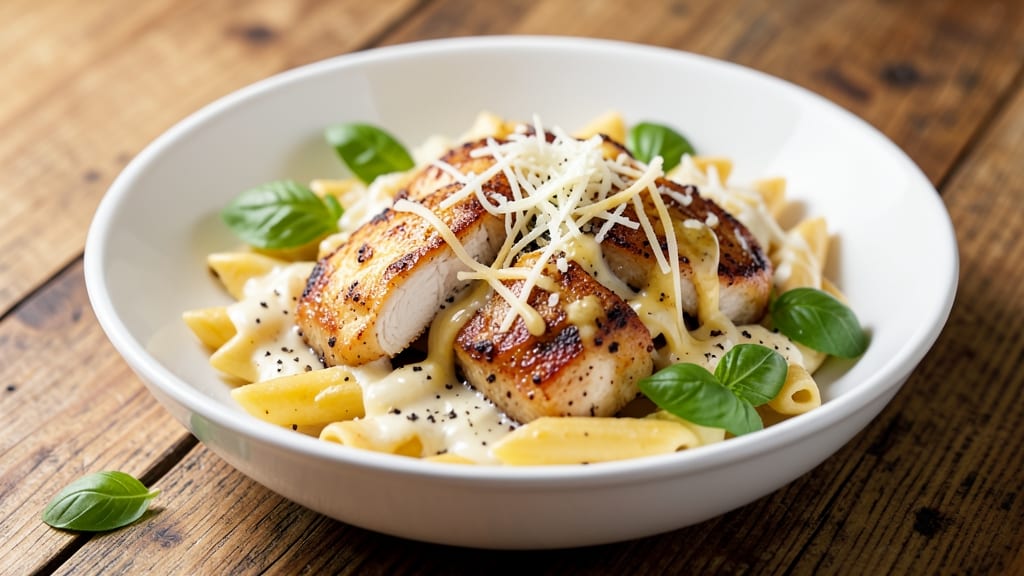
Applebee's three-cheese chicken penne sauce delivers that restaurant-quality crispy parmesan crust with a velvety tomato cream base—now you can recreate it at home. The secret lies in perfectly seared chicken, al dente pasta, and a three-cheese sauce that clings to every strand.
After years of testing, I've mastered the technique for achieving that signature crispy parmesan topping without the mess of breadcrumbs.
This recipe transforms simple ingredients into a dish that's rich, satisfying, and packed with flavor. You'll start with chicken thighs (their high fat content keeps them juicy) that get seared to golden perfection, then simmered in a sauce made with heavy cream, parmesan, mozzarella, and provolone.
The pasta cooks just right—al dente—so it holds up to the creamy sauce without turning mushy.
What makes this dish truly special is the crispy parmesan topping that forms a golden crust when broiled. It adds texture contrast to every bite while keeping the sauce underneath luxuriously creamy.
The combination of tender chicken, perfectly cooked pasta, and that signature crispy topping makes this restaurant favorite worth recreating.
Ready in about 45 minutes, this dish is perfect for weeknight dinners or special occasions. The sauce can be made ahead, so you can focus on searing the chicken and tossing the pasta when you're ready to serve. Let's get started on recreating this Applebee's classic at home.
Ingredients for applebee's three cheese chicken penne sauce
Chicken thighs, three cheeses, and crispy parmesan—here's how to recreate Applebee's signature penne sauce at home.
| Ingredient | Amount | Notes |
|---|---|---|
| Boneless, Skinless Chicken Thighs 🍗 | 1 ½ lb | Trimmed of excess fat for even cooking |
| Penne Pasta 🍝 | 12 oz | Dry weight, al dente preferred |
| Heavy Cream 🥛 | 1 cup | Full-fat for richest texture |
| Parmesan Cheese 🧀 | 1 cup | Freshly grated from block |
| Mozzarella Cheese 🧀 | 8 oz | Fresh, shredded by hand |
| Provolone Cheese 🧀 | 4 oz | Shredded, mild variety |
| Tomato Paste 🍅 | 2 tbsp | High-quality, no sugar added |
| Garlic Cloves 🧄 | 4 cloves | Fresh, minced for sauce |
| Olive Oil 🫒 | 2 tbsp | Extra-virgin for searing |
| Butter 🧈 | 2 tbsp | Unsalted, for chicken searing |
| All-Purpose Flour 🌾 | 2 tbsp | For sauce thickening |
| Salt 🧂 | 1 ½ tsp | Diamond Crystal preferred |
| Black Pepper 🌶️ | ½ tsp | Freshly ground for flavor |
| Red Pepper Flakes 🌶️ | ¼ tsp | Optional, for heat |
| Fresh Basil Leaves 🌿 | ¼ cup | Chopped, for garnish |
The chicken thighs are non-negotiable here—they stay juicier than breasts during searing. Look for plump, evenly sized thighs at the meat counter, and trim any visible fat for cleaner searing. For the cheeses, Parmigiano-Reggiano is essential for that authentic flavor, while fresh mozzarella and provolone create the creamy base. I always grab my cheeses from the deli section (pre-shredded gets gummy)—Whole Foods or Trader Joe's have the best selection. The tomato paste? San Marzano is ideal, but any high-quality brand works. For the pasta, Barilla or De Cecco hold up best to the creamy sauce without turning mushy.
No heavy cream? Whole milk plus 1 tbsp butter works in a pinch, though the texture won't be as rich. Fresh mozzarella hard to find? Low-moisture shredded is fine—just squeeze out excess moisture. The garlic can be roasted (wrap whole cloves in foil, bake at 400°F for 10 minutes) for a sweeter flavor. For the crispy topping, Panko breadcrumbs add extra crunch if you want to deviate from pure cheese. The red pepper flakes are optional, but I always include them—just a pinch for subtle heat. Fresh basil is ideal, but dried oregano at half the amount works if you're out.
The sauce keeps beautifully for 3 days in the fridge, though it tastes best the first day. For the crispy topping, assemble the dish on a baking sheet lined with parchment—the parchment prevents sticking when broiling. If making ahead, assemble everything except the broiling step, then refrigerate. Bring to room temp before broiling for that perfect golden crust. Leftovers? Reheat gently in a skillet with a splash of milk to restore creaminess.
Why You'll Love This Recipe
- No Chopping Struggle: I swear by this recipe because the chicken thighs stay juicy while the penne cooks—just toss them in the same pot after browning, no fuss. The heavy cream and cheeses melt together so smoothly, you’ll forget you’re not at the restaurant.
- Cheesy Comfort in Minutes: That perfect blend of Parmesan and mozzarella—creamy but not greasy—wraps around each bite like a hug. Honestly, the first time I made it, I ate half the pan straight from the skillet.
- Leftovers That Still Win: This dish actually tastes better the next day, especially with the sauce thickened just right. I’ll be real: my freezer is stocked with portions because reheating it keeps that gooey cheese pull without drying out.
- Budget-Friendly Family Feast: Chicken thighs stretch further than breasts, and penne is cheaper than fussy pasta shapes. For under $15, I feed four people a meal that feels fancy—no one ever guesses it’s weeknight-friendly.
Step-by-step instructions for Applebee's three cheese chicken penne
Here's how to recreate that iconic crispy parmesan crust with velvety tomato cream at home.
Sear the Chicken Thighs to Golden Perfection
Pat the 1.5 lb boneless, skinless chicken thighs completely dry with paper towels—this ensures maximum crispiness. Heat 2 tablespoons olive oil and 2 tablespoons butter in a large skillet over medium-high heat until the butter foams and the oil shimmers. Season the chicken generously with 1.5 teaspoons salt and 0.5 teaspoon black pepper on both sides.
Place the chicken in the skillet and cook undisturbed for 4-5 minutes per side until the skin becomes deep golden brown and crispy. The chicken should release easily when you try to flip it—this is your signal it's ready. Transfer the chicken to a plate and let it rest while you prepare the pasta and sauce. Don't skip this resting step; it keeps the chicken juicy.
Cook the Penne Pasta to Al Dente
Bring a large pot of water to a rolling boil and add 1 tablespoon salt (it should taste like the ocean). Add the 12 oz penne pasta and cook according to package directions until 1 minute shy of al dente—you want it to finish cooking in the sauce. Reserve 1 cup of pasta water before draining, as this starchy liquid is essential for creating a silky sauce.
Drain the pasta and return it to the pot, tossing with a tablespoon of the freshly grated parmesan cheese to prevent sticking. Keep the pasta warm while you prepare the sauce. The pasta should be hot but not overcooked—it should have a slight bite to it when you test a piece.
Build the Velvety Tomato Cream Sauce
In the same skillet used for the chicken (no need to clean it—the browned bits add flavor), reduce the heat to medium. Add 2 tablespoons tomato paste and stir to coat the bottom of the pan, scraping up any browned bits. Cook for 1-2 minutes until the tomato paste darkens slightly and becomes fragrant.
Add the 4 minced garlic cloves and cook for 30 seconds until fragrant—don't let it brown or it'll turn bitter. Pour in the 1 cup heavy cream and stir to combine. Sprinkle the 2 tablespoons all-purpose flour over the mixture and whisk vigorously for 1-2 minutes until the sauce thickens to a velvety consistency. If the sauce is too thick, add 2-3 tablespoons of reserved pasta water to loosen it.
Create the Crispy Parmesan Crust
Reduce the heat to low and stir in 0.25 teaspoon red pepper flakes (if using), 0.5 teaspoon black pepper, and 1 teaspoon salt. Add 8 oz shredded mozzarella cheese and 4 oz shredded provolone cheese, stirring until fully melted and smooth. Remove the skillet from heat and fold in the cooked penne pasta, coating each strand evenly with the sauce.
Transfer the pasta to a serving dish and top with the 1.5 lb seared chicken thighs, cutting them into bite-sized pieces if needed. Sprinkle the remaining 0.5 cup parmesan cheese evenly over the top, pressing down gently to create a crispy, golden crust. Place under a broiler for 2-3 minutes until the cheese melts and turns deep golden brown and bubbly.
Garnish and Serve Immediately
Remove the dish from the broiler and let it rest for 1-2 minutes before serving. Garnish with 0.25 cup chopped fresh basil leaves and an extra sprinkle of black pepper. The crust should be crispy and golden, while the sauce underneath remains velvety and rich.
Serve immediately while the crust is still crispy and the pasta is piping hot. Each bite should deliver a perfect balance of creamy tomato sauce, melted cheeses, and tender chicken. This dish is best enjoyed fresh, so don't wait too long before serving!
Pro Tips For Making Applebee'S Three Cheese Chicken Penne Sauce
- SEAR THIGHS UNTIL GOLDEN: I used to walk away when the chicken thighs hit 165°F, but that’s when they turn dry. For this creamy sauce, push them to 175°F—just until they’re just pulling away from the bone. The extra carryover cooking in the sauce will finish them perfectly without drying them out.
- SALT THE PASTA WATER LIKE THE OCEAN: No, I’m not kidding—this isn’t the time for half-measures. Use 2 tablespoons of salt per 4 quarts of water, or your penne will taste like sad, bland noodles swimming in lukewarm broth. Trust me, the sauce will thank you later when it clings instead of sliding off.
- STIR THE SAUCE CONSTANTLY: The moment you add the heavy cream, that sauce will curdle if you’re not paying attention. I learned this the hard way—my first attempt looked like a science experiment gone wrong. Keep stirring over medium-low heat until it thickens, or you’ll end up with a lumpy, grainy mess.
- UPGRADE WITH A SPLASH OF MILK: Heavy cream makes the sauce rich, but it can feel heavy. Swap ¼ cup of the heavy cream for whole milk—it lightens the texture without sacrificing creaminess. Also, the milk helps the cheese melt more smoothly, so you won’t get those stubborn, unmelted mozzarella chunks.
Troubleshooting perfect results
Sauce Too Thick?
If your sauce feels like glue after adding the cheeses, don’t panic—this happens when the pasta water evaporates too quickly.
I’ve found the best fix is to remove the pan from heat immediately after adding the cheeses and stir in 2-3 tablespoons of reserved pasta water (the starchy liquid you saved earlier). The sauce should loosen instantly.
For extra insurance, keep the pan off the heat while stirring—heat causes thickening. 💫
Cheese Not Melting Smoothly?
Pre-shredded cheese is the #1 culprit for clumpy sauce. If your mozzarella or provolone isn’t blending smoothly, switch to freshly grated block cheeses (like Whole Foods’ mozzarella) and shred them yourself using a box grater.
For pre-shredded, squeeze out excess moisture with a paper towel before adding—this prevents a gummy texture. Also, keep the heat on low while melting cheeses to avoid burning.
Pasta Turning Mushy?
Overcooked pasta is a common mistake when combining with creamy sauces. To prevent this, cook your penne just 1 minute shy of al dente and finish cooking in the sauce.
If your pasta feels too soft after tossing, sprinkle it with 1 teaspoon of cold water and stir—this firms it up instantly. Pro tip: Use Barilla or De Cecco pasta—they hold their shape better in creamy sauces than generic brands. 🍝
Crust Not Crispy Enough?
The broiler is your secret weapon for that signature crispy parmesan crust. If yours isn’t browning properly, preheat the broiler on high for 5 minutes before broiling.
Place the dish on the middle rack (not too close to the heat source) and watch closely—2-3 minutes max is all it needs. For extra crunch, sprinkle 1 tablespoon of crushed parmesan on top right before broiling.
Also, press the cheese down gently with a spatula to help it form a solid crust.
Chicken Too Dry?
Skipping the rest step after searing is the fastest way to dry out your chicken. Always let seared chicken rest for 5 minutes before cutting—this lets juices redistribute. If your chicken still feels dry, try brining it for 30 minutes in 1 cup water + 1 tablespoon salt before cooking.
For extra moisture, add 1 tablespoon of heavy cream to the sauce and fold it in with the chicken before serving. 🍗
Sauce Too Salty?
This usually happens when you over-salt the chicken or add too much cheese. To fix it, stir in 1 tablespoon of heavy cream or 1 tablespoon of reserved pasta water—both dilute the saltiness.
If the sauce still tastes too strong, add a pinch of sugar (just ¼ teaspoon) to balance the flavors. For prevention, taste the sauce before adding all the cheese—this gives you time to adjust seasoning early. 🧂
Nutrition facts
Frequently asked questions
Can I use chicken breasts instead of thighs?
Chicken thighs are ideal because their higher fat content keeps them juicy during searing. If you must use breasts, pound them to ½-inch thickness and cook for 3-4 minutes per side on medium heat to prevent drying. Add 1 tablespoon heavy cream to the sauce to compensate for the drier meat.
What's the best way to make this dish ahead of time?
Prepare the sauce and cook the pasta up to 2 days ahead, storing them separately in the fridge. Reheat the sauce gently on the stove, then toss with cold pasta. For the chicken, sear it fresh and add it to the warm pasta just before serving. The crispy topping should always be made fresh—broil it right before plating.
Can I make this dish vegetarian?
Swap the chicken for 12 oz grilled portobello mushrooms or 12 oz crispy baked tofu. For extra protein, add 1 cup cooked chickpeas to the pasta. The cheese sauce and crispy topping will still shine as the star.
Why does my sauce get watery when I add cheese?
This happens when the pasta water evaporates too quickly or the cheese contains too much moisture. Always use freshly grated block cheeses (not pre-shredded) and squeeze out excess liquid with a paper towel. If the sauce still separates, remove it from heat and whisk in 1-2 tablespoons of reserved pasta water to restore creaminess.
How do I keep the crispy parmesan topping from getting soggy?
Broil the dish on the middle rack for just 2-3 minutes until golden brown, then serve immediately. For extra insurance, sprinkle 1 tablespoon crushed parmesan on top right before broiling. Avoid covering the dish—this traps steam and makes the crust soggy. The key is speed and timing!