
Main Courses
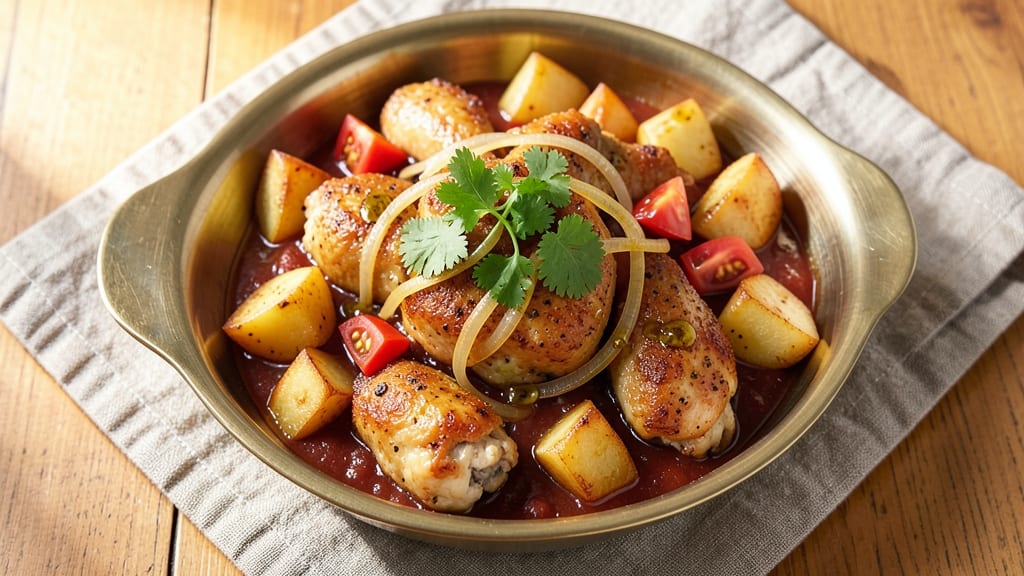
This aloo chicken salan recipe brings the rich, tangy flavors of South Indian cuisine to your kitchen with tender chicken and potatoes in a fragrant, tamarind-infused gravy. The secret lies in the slow simmering process that melds spices into every bite, creating a dish that's both comforting and deeply flavorful.
I've perfected this recipe over years of testing, balancing authentic techniques with home-cook simplicity.
The beauty of aloo chicken salan is its versatility—it's hearty enough for a weeknight dinner but elegant enough for special occasions. The tamarind adds a bright, tangy contrast to the rich spices, while potatoes absorb all the flavors, making every spoonful satisfying.
With just a few key ingredients and a patient cooking approach, you'll achieve restaurant-quality results at home.
What makes this dish truly special is how the spices develop over time, creating layers of aroma and taste that come together perfectly. The chicken becomes melt-in-your-mouth tender, and the potatoes achieve just the right texture—soft but not mushy.
This recipe delivers on both authenticity and ease, ensuring your South Indian feast is both impressive and foolproof.
Serve it with steamed basmati rice or warm roti to soak up every last drop of that flavorful gravy. The combination of textures and tastes makes this dish unforgettable, proving that traditional recipes can be both simple and extraordinary. Let's get cooking!
Ingredients for aloo chicken salan
Tender chicken, hearty potatoes, and tamarind's tangy magic for a South Indian feast.
| Ingredient | Amount | Notes |
|---|---|---|
| Chicken Thighs 🍗 | 1 ½ lb | Bone-in, skin-on preferred |
| Russet Potatoes 🥔 | 2 medium | Cut into 2-inch chunks |
| Tamarind Paste 🍈 | ¼ cup | Adjust for tanginess |
| Onion 🧅 | 1 whole | Finely chopped |
| Tomato 🍅 | 2 medium | Pureed or finely chopped |
| Ginger 🧄 | 1 inch | Fresh, grated |
| Garlic Cloves 🧄 | 6 cloves | Minced |
| Green Chili 🌶️ | 2 whole | Slit lengthwise |
| Cumin Seeds 🌿 | 1 tsp | Toasted lightly |
| Turmeric Powder 🌶️ | ½ tsp | Freshly ground preferred |
| Coriander Powder 🌿 | 1 tbsp | Toasted for depth |
| Red Chili Powder 🌶️ | 1 tsp | Adjust for heat |
| Salt 🧂 | 1 tsp | Adjust to taste |
| Coconut Oil 🫒 | ¼ cup | For authentic flavor |
| Fresh Curry Leaves 🌿 | ¼ cup | Optional but recommended |
The chicken thighs are non-negotiable here—bone-in, skin-on gives that rich, authentic flavor (no boneless, skinless substitutes). Indian grocery stores usually have them pre-cut, but if you're at a regular supermarket, ask the butcher for a pound of drumsticks. Potatoes should be firm and starchy—Russets or Yukon Golds work best. For tamarind, Trader Joe's or Whole Foods carry the paste in tubes, which is way easier than dealing with tamarind blocks. Curry leaves? If you can't find them, skip them—the dish will still be delicious, just missing that signature aroma. The key is getting good spices: Penzeys or the bulk bins at Sprouts for the freshest cumin and coriander.
No tamarind paste? Lemon juice plus a pinch of sugar gets you close, though it won't be as complex. Fresh ginger and garlic are ideal, but jarred works in a pinch (just taste first—sometimes it's overpowering). The green chilies can be swapped for red chili flakes if you prefer milder heat. For coconut oil, Goya or Store Brand from the Latin aisle are budget-friendly and work perfectly. The curry leaves? If you can't find them, dried thyme at half the amount is a decent stand-in. And if you're short on time, pre-chop the onions and ginger while the chicken simmers—saves cleanup later.
This dish tastes even better the next day as the flavors meld. Store leftovers in the fridge for up to 4 days, or freeze portions for 3 months. I always make a double batch because it disappears fast—great for meal prep. The gravy thickens as it cools, so add a splash of water when reheating. Serve with steamed basmati rice or warm roti to soak up every last drop of that tangy, spiced goodness. The potatoes will get even softer when reheated, so don't stress if they're not perfectly tender straight out of the pot.
Why You'll Love This Recipe
- One-Pot Magic: I swear by this recipe on lazy nights—just toss in the chicken, potatoes, onions, and a splash of tamarind paste, then let the pressure cooker do the work. No chopping frenzy, no multiple pans, and honestly? The flavors meld better this way.
- Tamarind Tang Twist: That tamarind paste isn’t just a secret ingredient—it’s the star. It cuts through the richness of the chicken thighs, balancing the creamy potatoes with a bright, almost citrusy kick. (Yes, even if you’ve never loved tamarind before.)
- Lunchbox Hero: Between us, this dish tastes even better the next day. Pack it for work or school—cold or reheated, the potatoes stay fluffy, the chicken stays juicy, and no one will guess it’s a one-dish wonder. My kid’s favorite, and she’s a picky eater.
- Budget Powerhouse: Chicken thighs are forgiving, potatoes are cheap, and onions/tomatoes stretch a long way. I’ve fed six people for under $15 with this—plus, the leftovers freeze like a dream. Not the prettiest, but the taste makes up for it every time.
Step-by-step instructions for aloo chicken salan
Here's how to make this tangy, aromatic curry that balances spicy, sweet, and sour notes perfectly.
Prepare the Chicken and Potatoes
Start by cutting the 1.5 lb chicken thighs into bite-sized pieces, leaving the skin on if using bone-in. Pat them dry with paper towels to help them brown better. In a separate bowl, peel and cut the 2 medium russet potatoes into 2-inch chunks—this size ensures they cook through without turning mushy.
Set both aside for now. The key here is even-sized pieces so everything cooks at the same rate. I like to keep the potato chunks slightly larger than the chicken pieces—they'll soften while the chicken finishes cooking. Don't worry about perfect uniformity, but try to keep them roughly the same size within each group.
Temper the Spices in Coconut Oil
Heat 0.25 cup coconut oil in a heavy-bottomed pot over medium heat. Add the 1 tsp cumin seeds and let them sizzle for 30 seconds until they turn golden and fragrant—this releases their nutty aroma. Immediately add the 1 whole finely chopped onion and sauté for 5-6 minutes until soft and translucent.
Next, add the 1 inch grated ginger, 6 cloves minced garlic, and 2 slit green chilis. Stir for 1-2 minutes until the raw garlic smell disappears and the mixture turns aromatic. Here's where the magic happens—the spices should be sizzling gently, not burning. If they start to darken too quickly, reduce the heat slightly. This spice base forms the flavor foundation for the entire dish.
Build the Tangy Base with Tamarind
Add the 0.25 cup tamarind paste, 2 medium pureed tomatoes, 0.5 tsp turmeric powder, 1 tbsp coriander powder, 1 tsp red chili powder, and 1 tsp salt to the pot. Stir well to combine, then let the mixture cook for 8-10 minutes over medium-low heat until it thickens slightly and the oil starts to separate on top.
This is your tangy-savory base. The tamarind gives that signature South Indian tang, while the tomatoes add depth. You'll see the mixture darken and reduce—this is normal and actually enhances the flavor. Taste it now (careful, it's hot!) and adjust the salt or chili powder if needed. The sauce should be balanced between sweet, sour, and spicy at this stage.
Cook the Chicken and Potatoes Together
Add the prepared chicken pieces to the pot and stir to coat them in the spice mixture. Let them cook for 5 minutes to absorb some of the flavors. Then add the potato chunks and 0.25 cup fresh curry leaves. Stir everything together and add ½ cup water—just enough to create a light sauce that will cook down as everything simmers.
Cover the pot and cook over medium-low heat for 20-25 minutes, stirring occasionally. The chicken should be tender and the potatoes fork-tender with a slight bite. You want the potatoes to soften but not fall apart—they should hold their shape while being easy to pierce with a fork. If the mixture looks too dry, add 2-3 tablespoons water at a time until you reach your desired consistency.
Finish and Adjust the Flavor
Once everything is tender, uncover the pot and let it simmer for another 5 minutes to allow any excess moisture to evaporate. This final step helps thicken the sauce slightly and deepen the flavors. Taste and adjust the seasoning—you might need a bit more salt or chili powder to balance the tamarind's tanginess.
Garnish with an extra sprinkle of fresh curry leaves if you like, and serve hot with steamed rice or roti. The dish should have a beautiful balance of textures—tender chicken, slightly firm potatoes, and a glossy, tangy sauce that coats every bite. The aroma alone should make your mouth water, but the first bite is where it really shines!
Pro Tips For Making Aloo Chicken Salan
- Boil Potatoes First: I learned this the hard way—adding raw potatoes to the gravy turns them into gluey mush. Parboil them for 5–6 minutes until just tender, then finish in the sauce. This keeps their shape and lets them soak up the tangy tamarind-tomato base properly.
- Brown Chicken in Batches: Crowding the pan steams the thighs instead of searing. Work in two batches over medium-high heat for 4–5 minutes per side until golden. The crust locks in flavor—no one wants bland, pale chicken in their salan.
- Dilute Tamarind Paste: Tamarind is potent; skip the guesswork and mix 2 tablespoons with ½ cup warm water before adding. Strain if it’s fibrous, or you’ll end up with a gritty gravy. (Yes, even if you’re impatient like me.)
- Simmer Low and Slow: After adding tomatoes and onions, reduce heat to a bare simmer. Rushing this step makes the sauce separate. Let it cook uncovered for 15–20 minutes—this builds depth, not just flavor, but texture. Your future self will notice.
Common mistakes when making great aloo chicken salan
Overcooking the Chicken
The biggest mistake I see is letting the chicken dry out or turn rubbery. Since we're cooking it with potatoes, it's easy to overlook the chicken's doneness, especially when the potatoes need that extra 5-10 minutes to soften.
Always check the chicken's internal temperature with a meat thermometer—it should reach 165°F but not a second longer. I've ruined a perfectly good batch by leaving it on heat too long, so set a timer and check frequently. 🌡️
Skipping the Tamarind Step
Some cooks try to substitute tamarind with lemon juice or vinegar, but this completely changes the dish's character. Tamarind provides that unique tangy-sweet balance that's essential to aloo chicken salan.
If you must substitute, use ½ cup tamarind concentrate (available at Indian grocery stores) mixed with 1 tbsp sugar to mimic the depth. The paste gives a complexity that lemon just can't replicate—trust me, I've tried!
Uneven Potato Sizes
Potatoes that are too small will turn to mush, while oversized chunks stay rock-hard. Cut all potato pieces to 2-inch chunks (about the size of a golf ball) for even cooking. I like to keep them slightly larger than the chicken pieces so they soften while the chicken finishes.
If you're in a hurry, you can parboil the potatoes for 5 minutes before adding them to the curry to speed up cooking.
Burning the Spices
Rushing the spice tempering step is a common mistake that leads to bitter flavors. The cumin seeds need 30 seconds to toast properly, and onions should cook until soft but not browned. If your spices start to darken too quickly, reduce the heat to medium-low and stir constantly.
The goal is to develop the spices' flavors gently—this is where the dish's aromatic foundation is built. 🌿
Adding Too Much Water
Many home cooks panic when the curry looks dry and add too much water, which dilutes the rich flavors. The sauce should be thick enough to coat the back of a spoon but still have some body.
If needed, add water in 2-tablespoon increments while stirring. The sauce will thicken as it simmers, so start with less rather than more. I usually add just enough to keep the ingredients moist without making it soupy.
Ignoring the Resting Time
After cooking, let the curry rest for 10 minutes off the heat before serving. This allows the flavors to meld together and the potatoes to absorb more of the spiced gravy. Skipping this step means serving a dish where the flavors are still separating.
I know it's tempting to dig in immediately, but that 10-minute wait** makes all the difference in the final result. ✨
Nutrition facts
Frequently asked questions about aloo chicken salan
Can I use chicken breast instead of thighs?
Chicken thighs are ideal because they stay juicier during the long cooking process. If you must use breast, cut them into small pieces and add them 5 minutes before the potatoes are done to prevent drying. Bone-in thighs give the most authentic flavor, but boneless works too—just don't skip the skin for crispy texture.
How do I adjust the spice level?
The recipe includes 1 tsp red chili powder for mild heat. For medium heat, add 1 tsp extra chili powder and 1 green chili. For hot, use 1.5 tsp red chili powder plus 2 extra green chilies. Taste before serving—you can always add more chili powder, but you can't remove it once added.
What if I don't have tamarind paste?
Mix ½ cup lemon juice with 1 tbsp sugar to mimic tamarind's tangy-sweet balance. For deeper flavor, add ½ tsp amchur (dry mango powder) if available. The dish won't be identical, but it'll still be delicious. The key is balancing acidity with sweetness—taste and adjust as you go.
Can I make this in an Instant Pot?
Yes! Sauté the spices as directed, then add all ingredients except water. Cook on high pressure for 8 minutes, then quick-release. Add ¼ cup water and simmer for 5 minutes to thicken. The Instant Pot cuts cooking time by half while keeping the flavors rich. Just be careful not to overcook the chicken—check it early!
How do I store leftovers?
Cool the curry completely, then store in an airtight container in the fridge for up to 4 days. Reheat gently on low heat, adding 1-2 tbsp water to prevent drying. For freezing, portion into containers and freeze for up to 3 months**. Thaw overnight in the fridge before reheating—never microwave directly from frozen.